Working Valleys
Cleared, reflashed valleys carry water off without overloading seams on either side.

As a West Mifflin commercial roof repair contractor, we repair warehouse and multi-tenant roofs, including valleys and sections shared with the building next door.
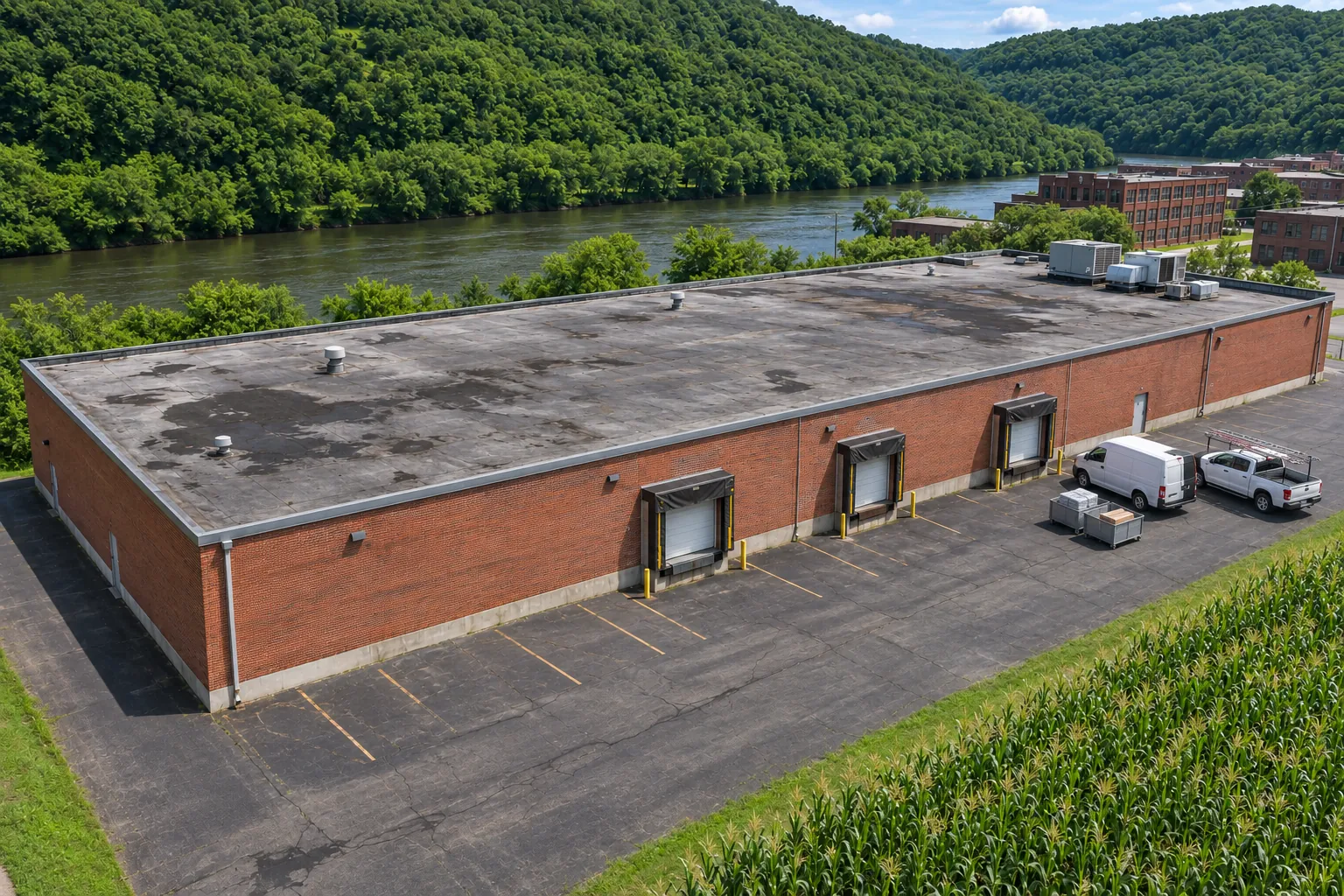
West Mifflin commercial roof repair on connected warehouses often means following water across a roof line that two owners share.
A valley that collects water from several sections can leak into one tenant space while the cause sits on a neighbor's roof. Stopping the inspection at the property line leaves half the drainage path unchecked.
We inspect every section that feeds the valley and the valley connection itself before defining the repair. Access to adjoining roofs gets arranged with the relevant owners or occupants, so the trace can follow the water.
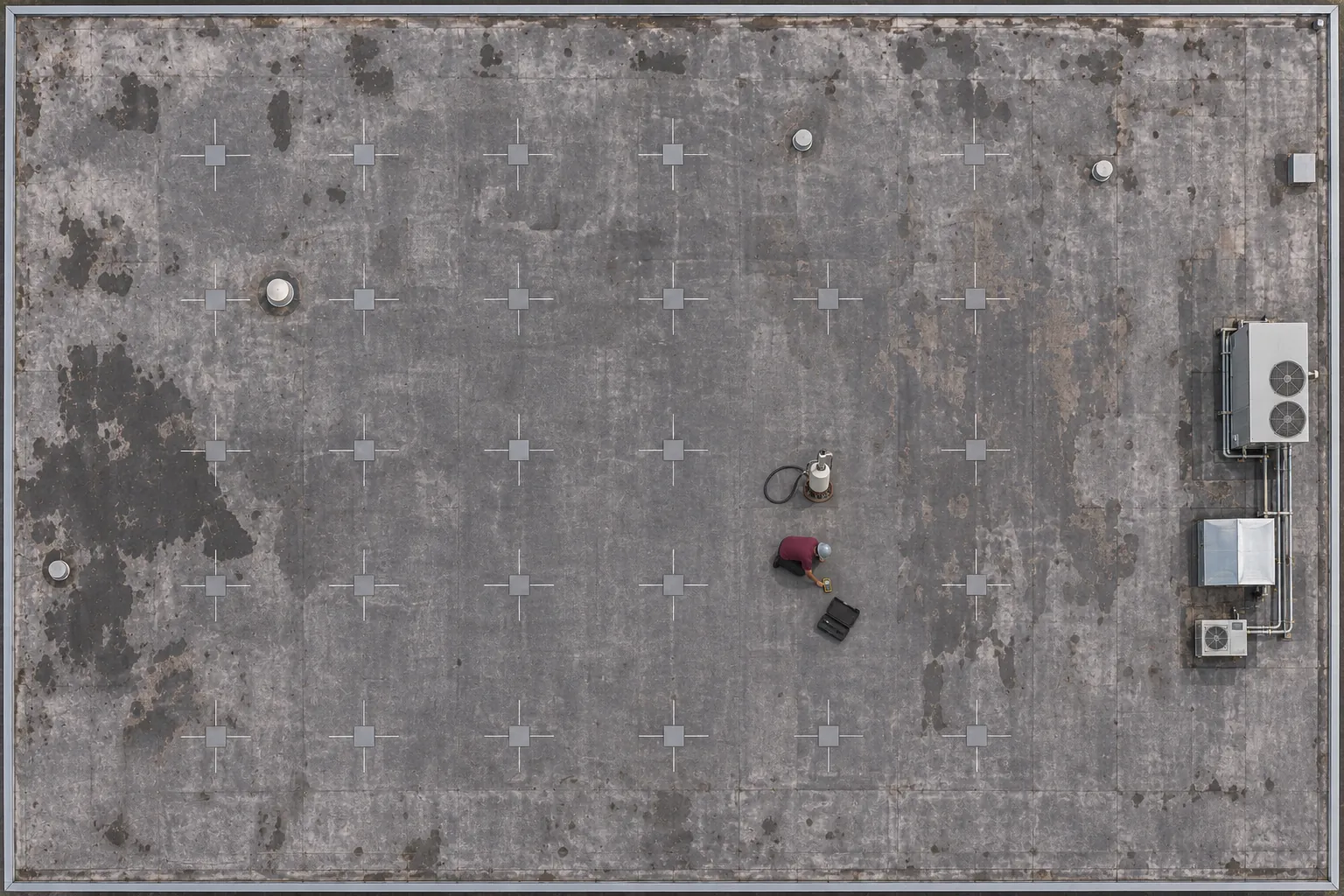
Connected warehouse roofs fail where sections, owners, and drains meet.
Valleys between buildings carry runoff from several roofs and overload at seams and outlets.
Coping and flashing on a dividing firewall crack where two roofs move differently.
A single outlet serving two spaces clogs, and water backs up toward whichever side sits lower.
Canopy connections at loading docks loosen wall flashing where trucks and ice hit the building.
Leaks that cross from one space into another get a temporary seal and a shared trace.
Sections built at different times meet at slightly different heights, leaving water along the roof joint.
A repair that follows the whole drainage path works for everyone sharing it.
Cleared, reflashed valleys carry water off without overloading seams on either side.
Traced water paths give neighboring owners a common roof record to work from.
Repairs near loading doors get scheduled around truck traffic and shift changes.
Each roof section gets its repairs documented separately for its owner.
Outlets serving two spaces are rebuilt to carry the runoff from both roofs.
Firewall flashing built for movement stops the crack-and-leak cycle at the wall.
Leaks stopped at the true entry keep water out of every space under the valley.
Access across neighboring roofs is booked ahead, so the trace can cover both roofs together.
Methods for roofs where one building ends and the next begins.
Valley membrane and flashing get rebuilt the full length, with outlets sized for every section draining in.
Dividing walls get new coping and counterflashing that let each roof move without opening the joint.
Canopy and wall flashing near the docks are rebuilt and protected from ice and impact.
Water tests run on both sides of the line once access to the adjoining roof is arranged.
Outlets and scuppers on shared valleys get checked against the roof area draining into them and rebuilt where they fall short.
Findings, photos, and repairs are recorded per roof section, so each owner gets a copy covering their side.
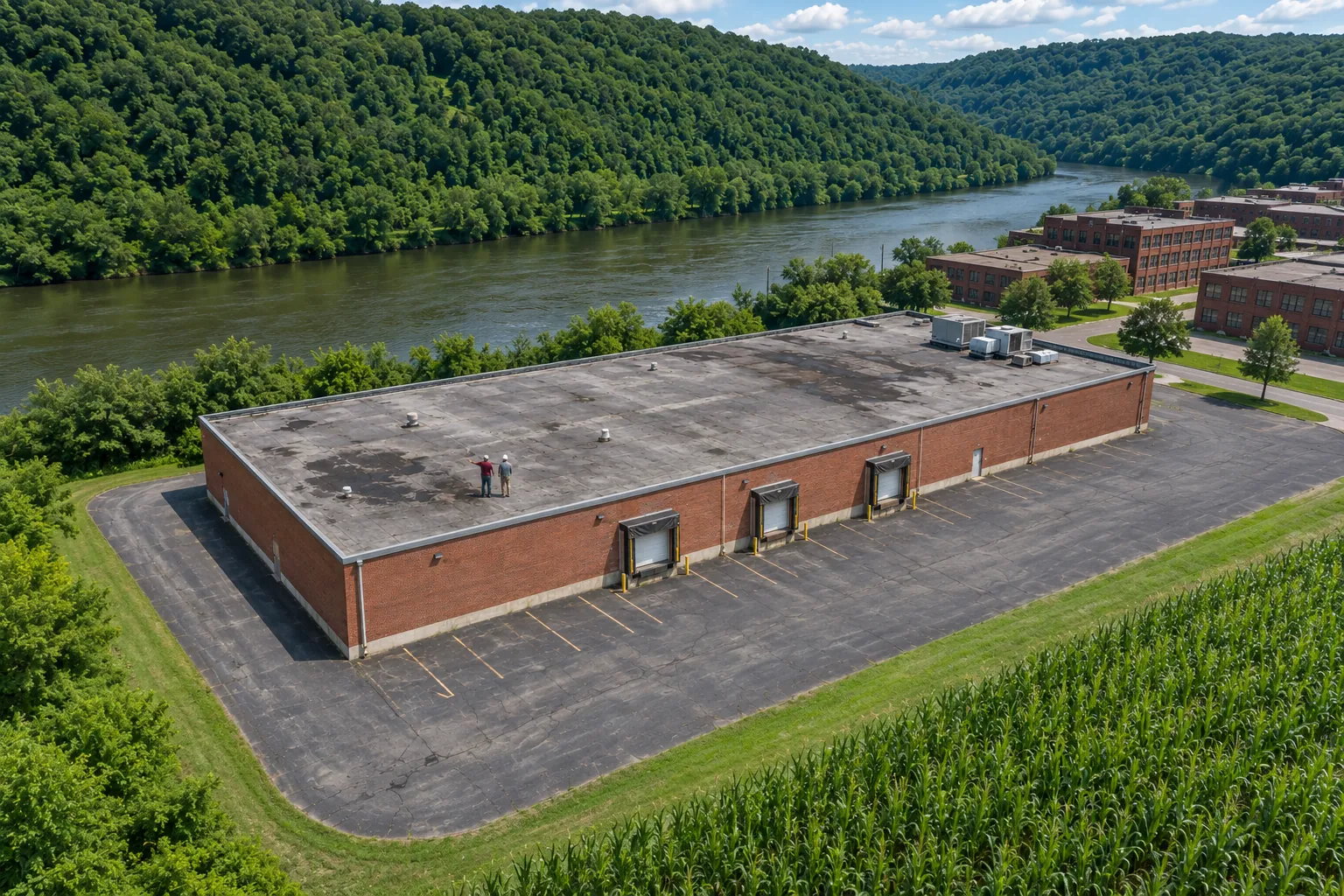
Send the address and who owns the adjoining roof. We arrange access and trace the water across the property line.
Get A Free EstimateFour steps keep owners and tenants informed as the trace crosses lines.
We list each owner and tenant whose roof feeds the leak and arrange access with them.
Every section draining toward the valley is walked, with outlets and seams checked.
Findings show where water enters the roof and which section it starts on, for each party to review.
Repairs proceed section by section, with each owner's roof area documented.
West Mifflin sits in our repair area along with Pittsburgh and four more towns. Building somewhere else? Please call us or send us a message.
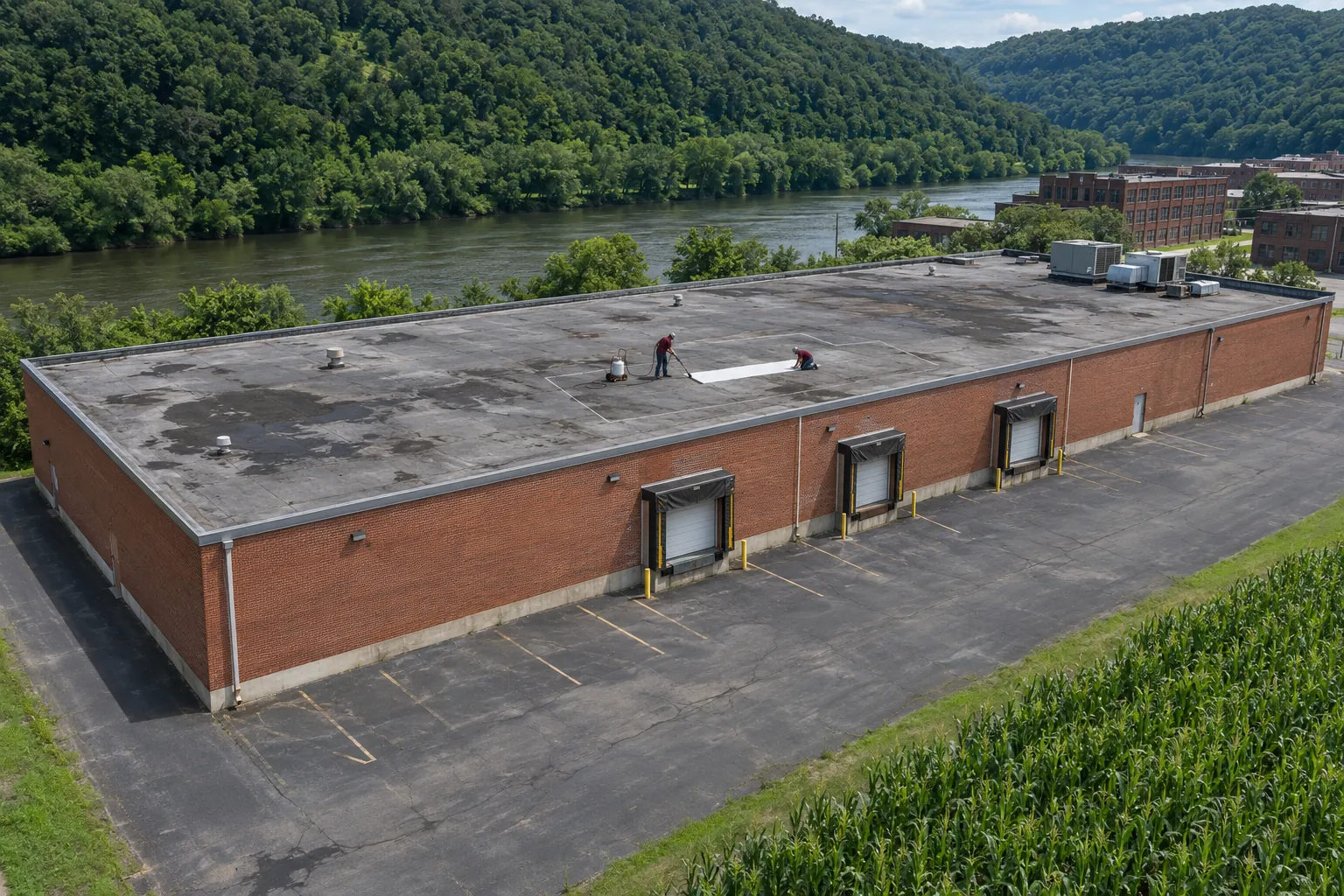
Warehouses, shops, and hillside blocks across the city.
Pittsburgh commercial roof repair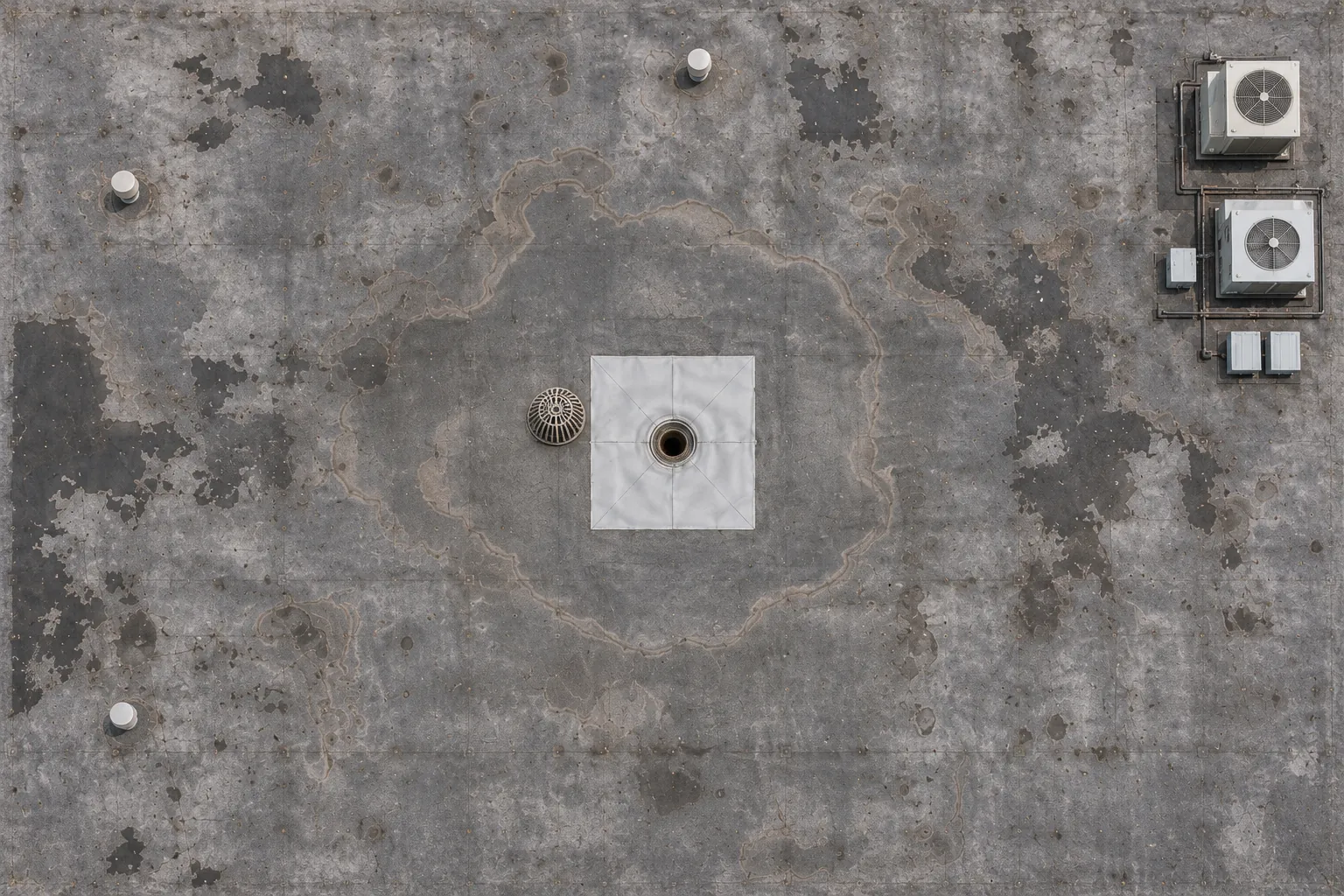
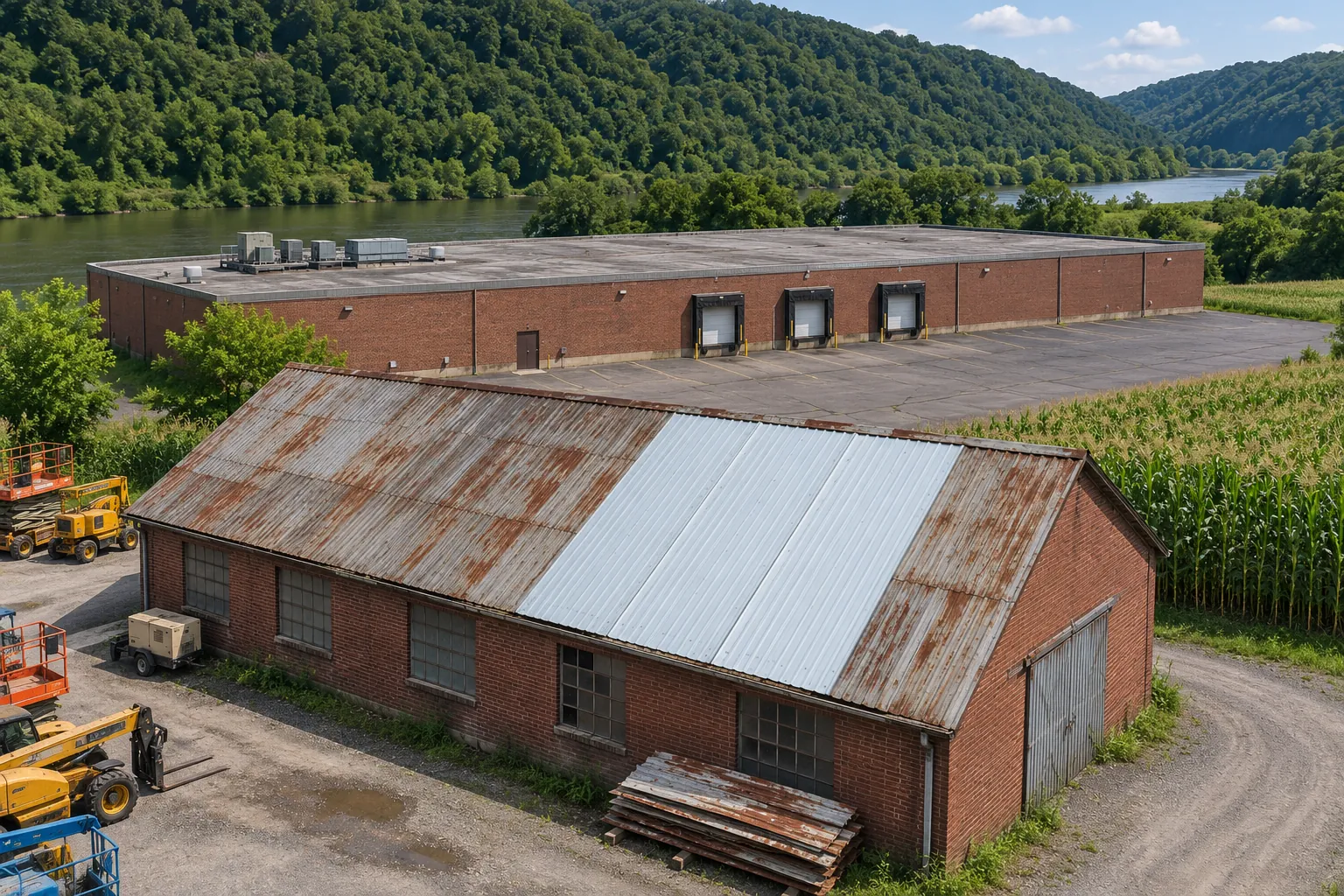
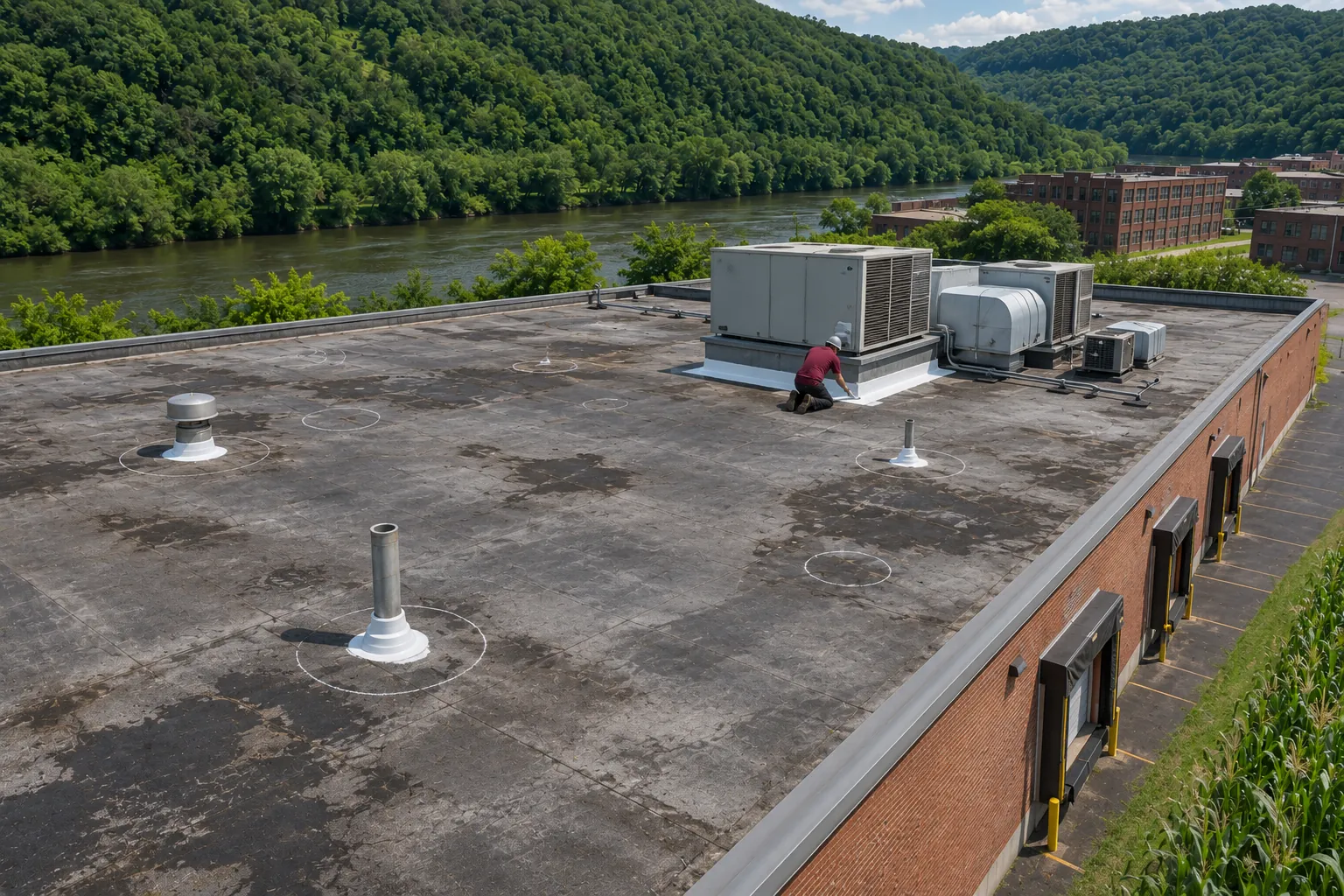
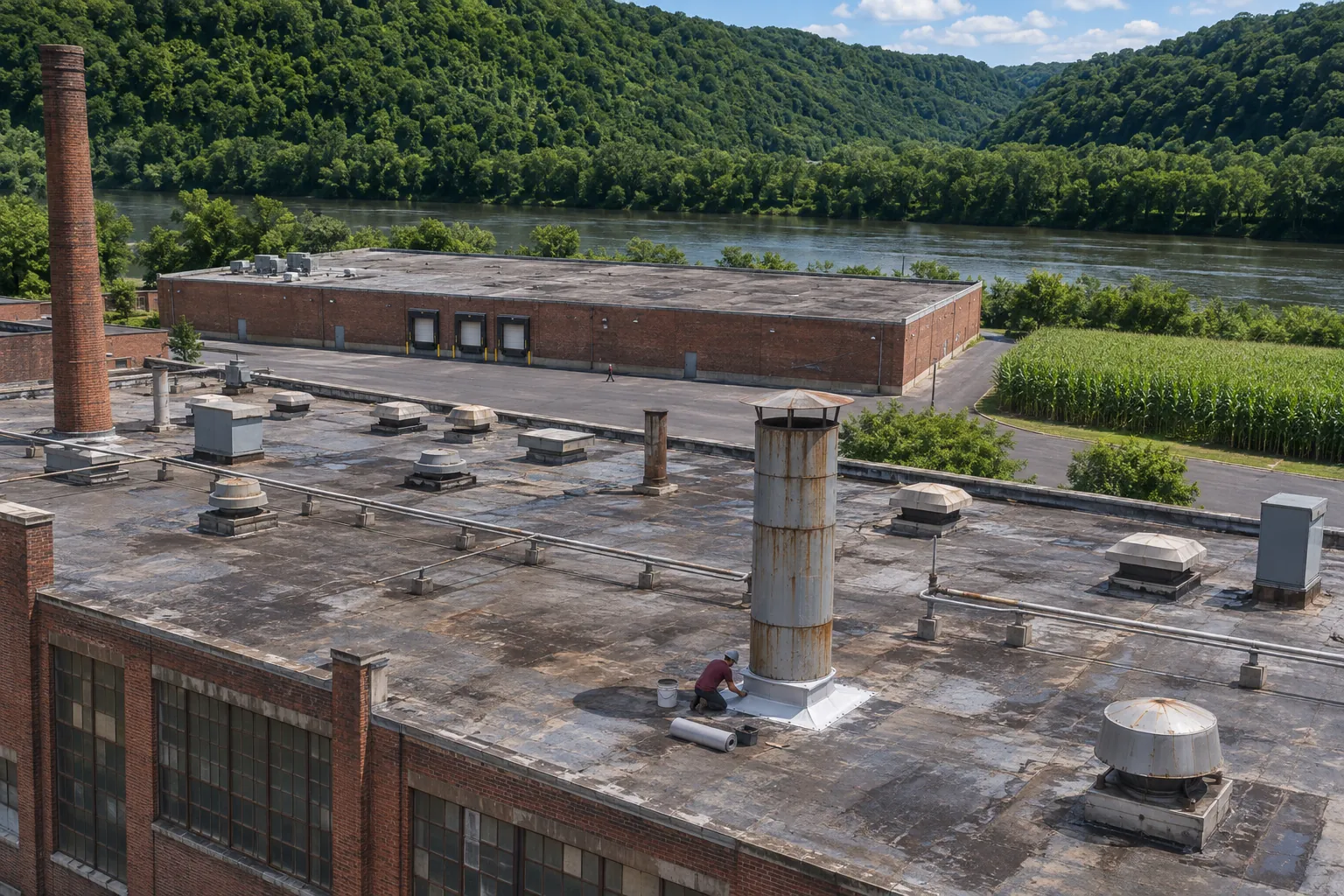
Answers for warehouse owners and tenants on connected roofs.
It can, when a shared valley takes water from several sections. We inspect those sections and the valley connection before defining the repair. Access gets coordinated with the relevant owners or occupants, so the investigation follows the drainage path past any property or tenant line.
That depends on ownership and any agreements between the buildings. We document which section each repair sits on and where the water starts, so the owners can divide the work with a clear record instead of an argument over a ceiling stain.
Two roofs meeting at a firewall move differently through heat and cold, which cracks coping and flashing at the joint. Rebuilding that flashing with room for movement ends the repeat leaks along the wall.
Yes, canopy brackets and flashing at the wall loosen from truck strikes and ice, letting water in behind the wall flashing. We check those connections whenever a leak sits near the docks.
Interior access helps when tracing a drip, so we ask for a contact who can open the space and point to where the water showed. The roof walk itself can run without tenants present.
We trace as far as your side allows and document where the water appears to come from. That record helps when you raise it with the neighbor or their manager, and repairs on your side still go ahead where they make sense.
Keep the findings, photos, and the list of repairs by section. If water shows up again, that record tells everyone which side was repaired and where the trace ended.
Send the address and who owns the neighboring roof. We arrange access, trace the water, and repair it section by section.