Open Doors
Front entrances stay usable while the roof over them is repaired in planned stages.

As a Mount Lebanon commercial roof repair contractor, we repair storefront and office roofs with ladders, staging, and overhead work kept clear of customer entrances.
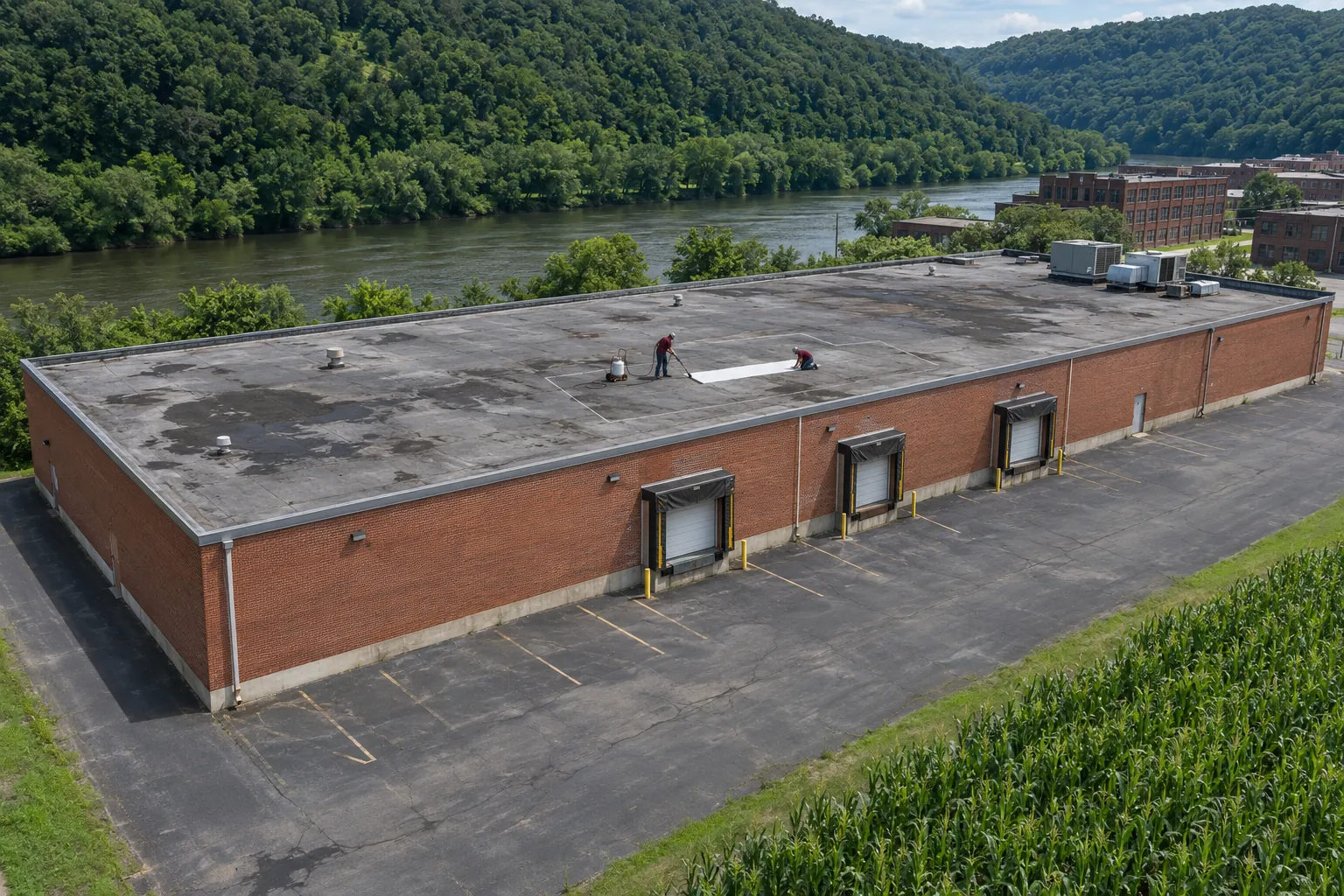
Mount Lebanon commercial roof repair on storefront rows starts with where people walk, because the roof edge often sits right over the main door.
We review the repair location and where materials will be staged before setting the work zone. When the roof area over the entrance can be separated from foot traffic, the door stays open and a covered path or a side route handles the rest.
Some jobs still need short restrictions, such as lifting materials past the front or working the parapet right above the door. The access plan follows the actual roof work, so owners know which hours are affected.
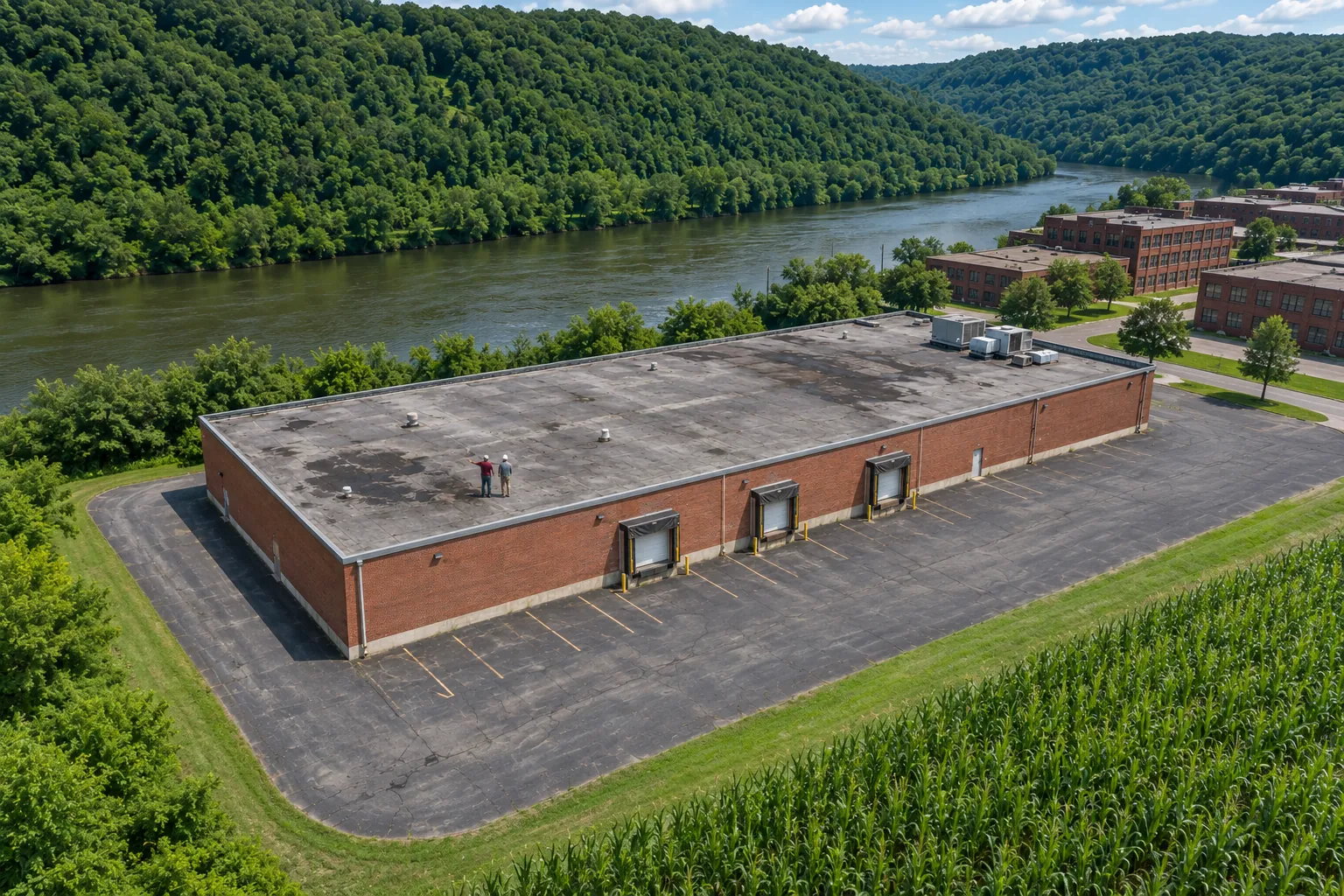
Storefront and office roofs here tend to fail at the same few details.
Open coping joints on the front wall send water down inside the parapet and onto the ceiling over the sales floor.
Through-wall scuppers clogged with leaves back water up behind the parapet along a row of connected shops.
Layered patches above a doorway mark repeat leaks at one detail, and the source needs finding instead of another layer.
Each tenant has a rooftop unit on its own curb, and cracked curb flashing drips into the space below it.
Drips near ceiling lights or sign wiring need power checked by your electrician and a temporary roof seal from us.
A repair planned around the entrance protects both the roof and the business under it.
Front entrances stay usable while the roof over them is repaired in planned stages.
Sealed coping and counterflashing keep water out of the brick above the storefront glass.
Repairs over occupied shops are scheduled and explained to tenants before roof work starts.
Owners of connected buildings get a written record of the roof repairs on each section.
Reflashed unit curbs stop drips into stores without moving the rooftop equipment.
Rebuilt scuppers move water off the shared roof run before it backs up.
Edge work booked for quiet hours keeps the busiest selling time uninterrupted below the roof.
Photos of each repaired detail give tenants proof of what changed overhead.
Each method keeps the front of the building working while the roof gets fixed.
Repairs over open shops get staged from the rear, with debris netting and covered paths under any edge work.
Entrance-side coping and flashing work gets short, scheduled windows, and the door stays open for the rest of the job.
Through-wall scuppers are cleared, reflashed, and sized so water leaves before it backs up behind the parapet.
Cracked curb flashing gets rebuilt, and the unit condensate line is checked for drips onto the membrane.
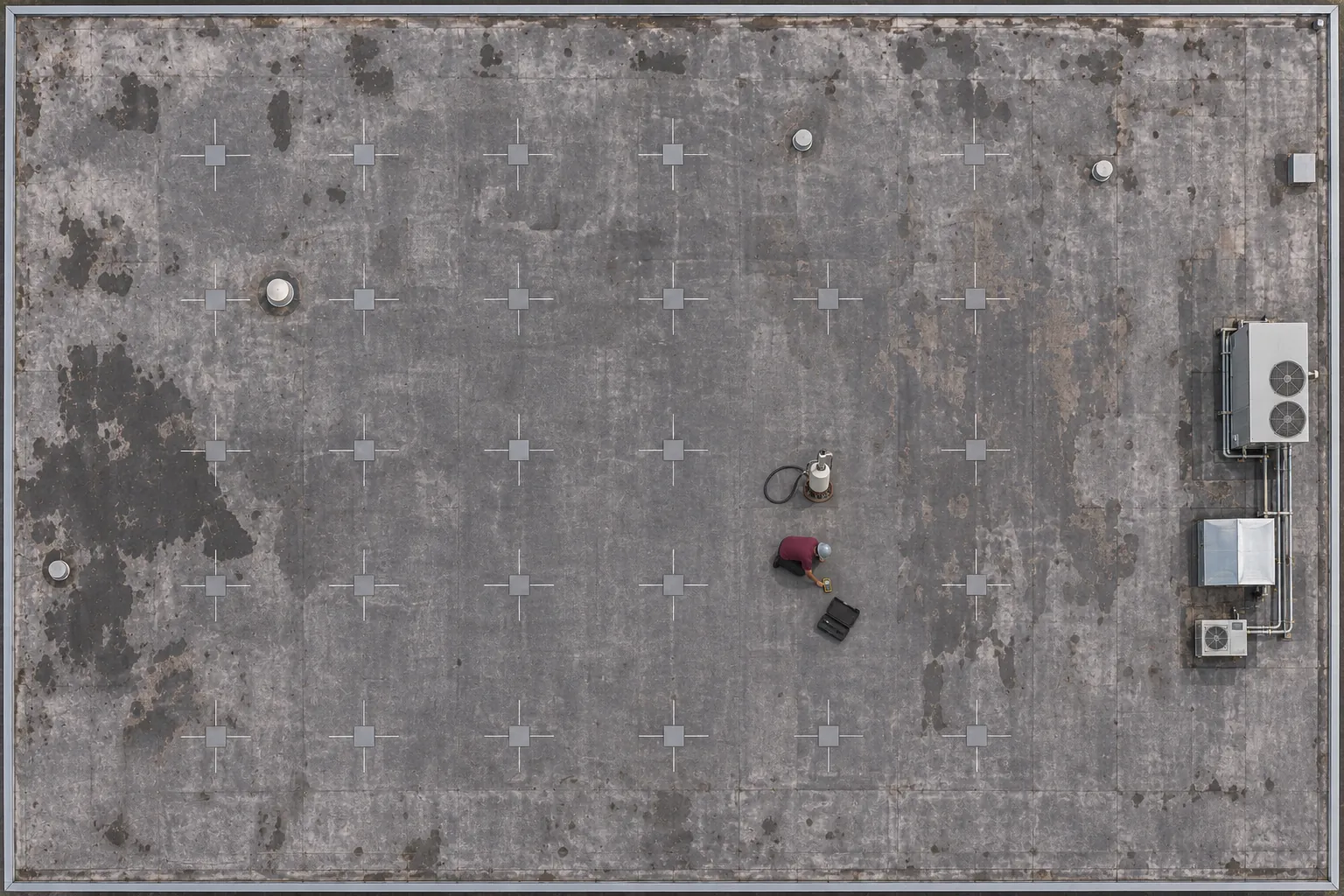
Send the address and the entrances that matter most. We plan the work zone and staging around them as part of the scope.
Get A Free EstimateFour steps set the job up around the people using the building.
We note every customer and staff door, the walkways under the roof edge, and where deliveries arrive.
Parapets, scuppers, curbs, and old patches are checked and photographed around the reported leak.
Ladders, material staging, and overhead work get placed away from open doors or scheduled for quiet hours.
Repairs finish section by section, and any restricted path reopens as soon as overhead work ends.
Besides Mount Lebanon, we repair commercial roofs in Pittsburgh and four other towns. For a building elsewhere, please call us or send us a message.
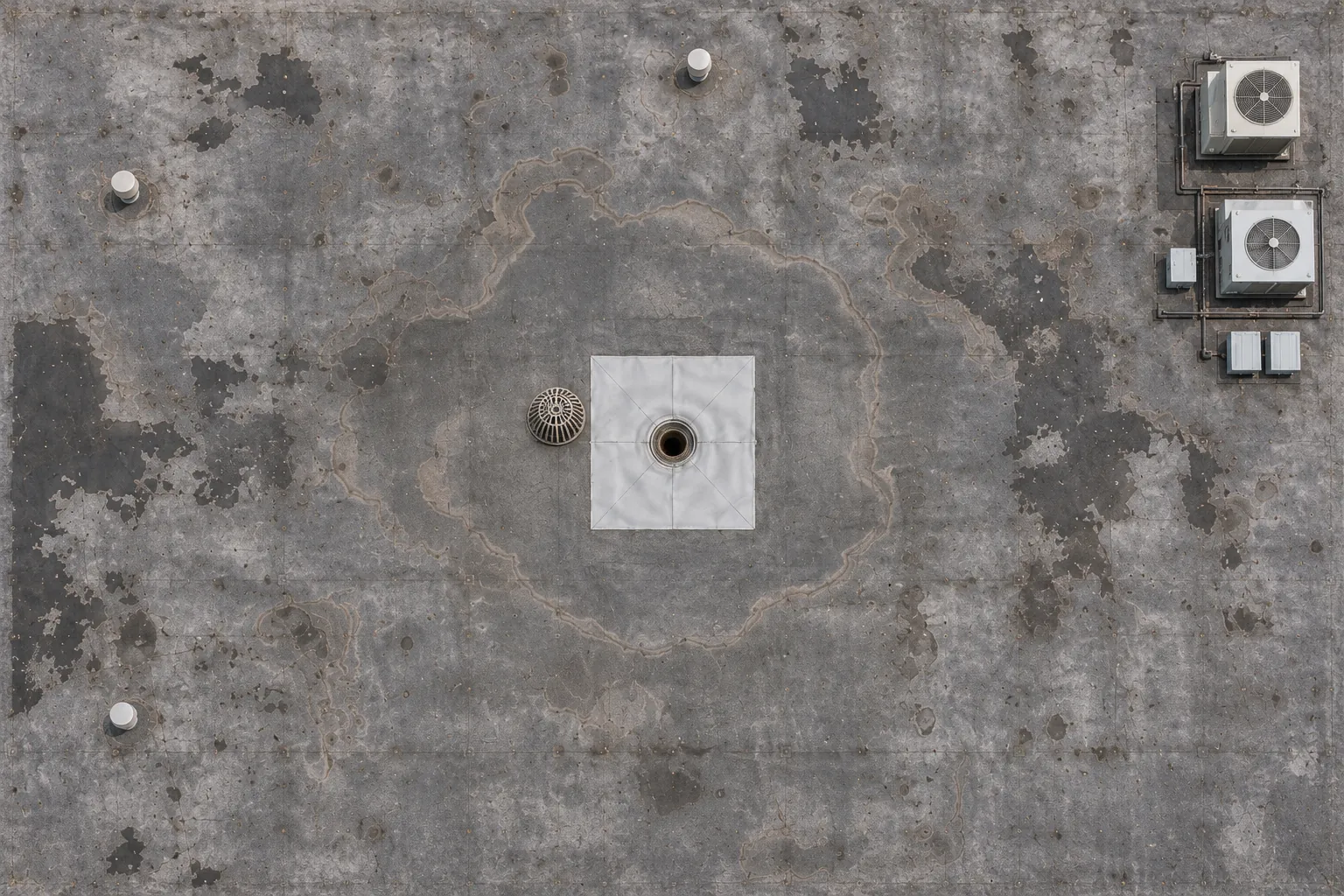
Warehouses, shops, and hillside blocks across the city.
Pittsburgh commercial roof repair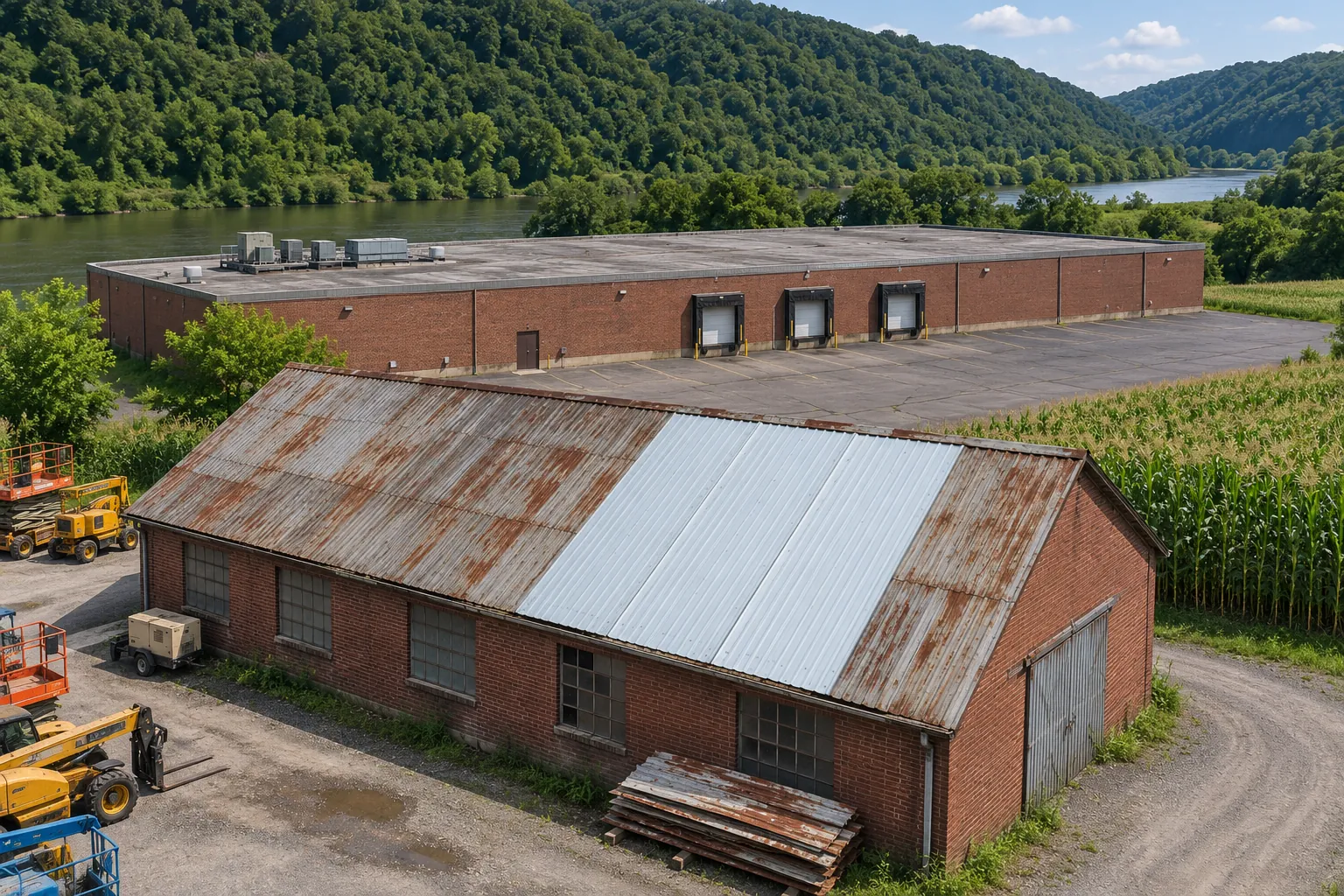
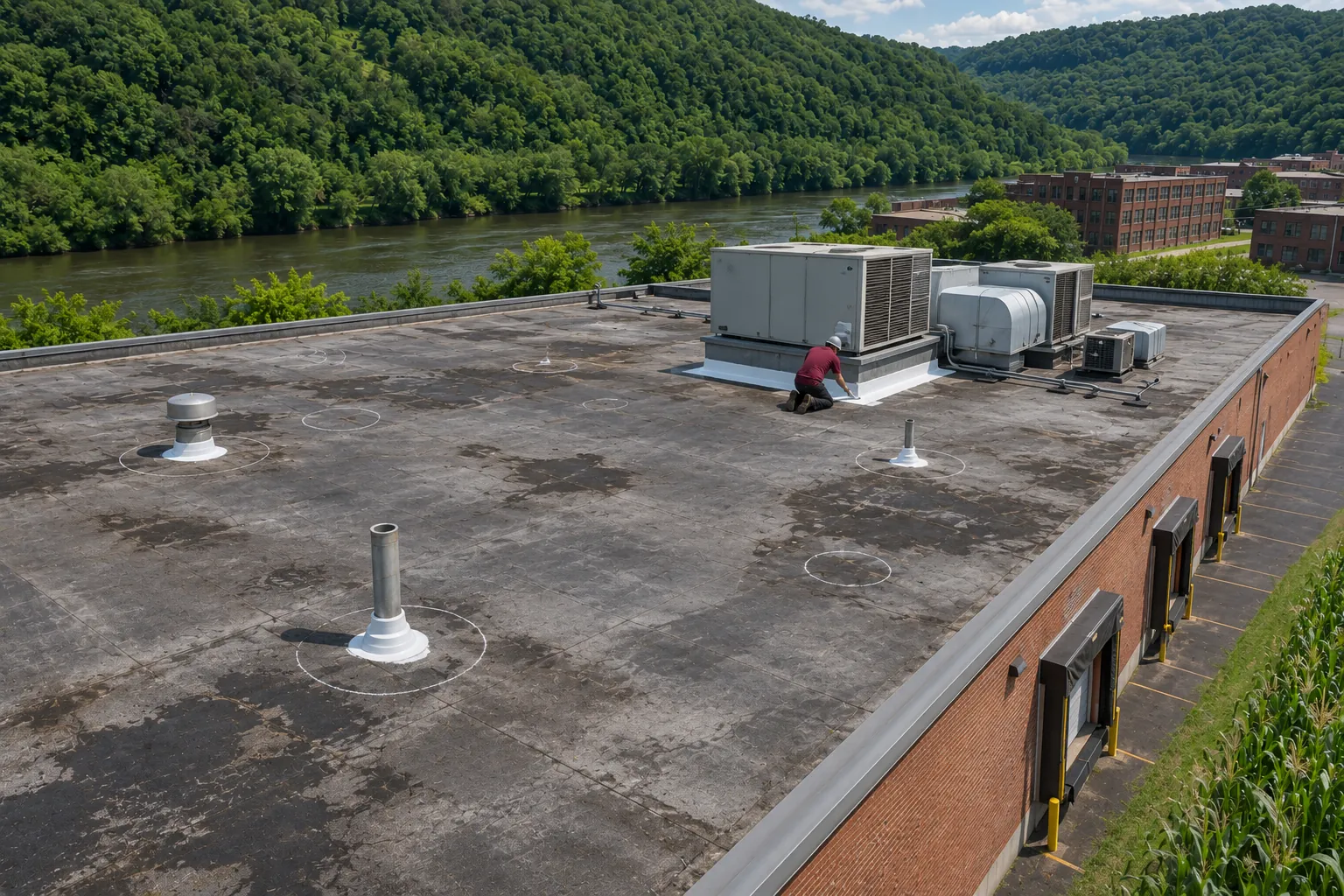
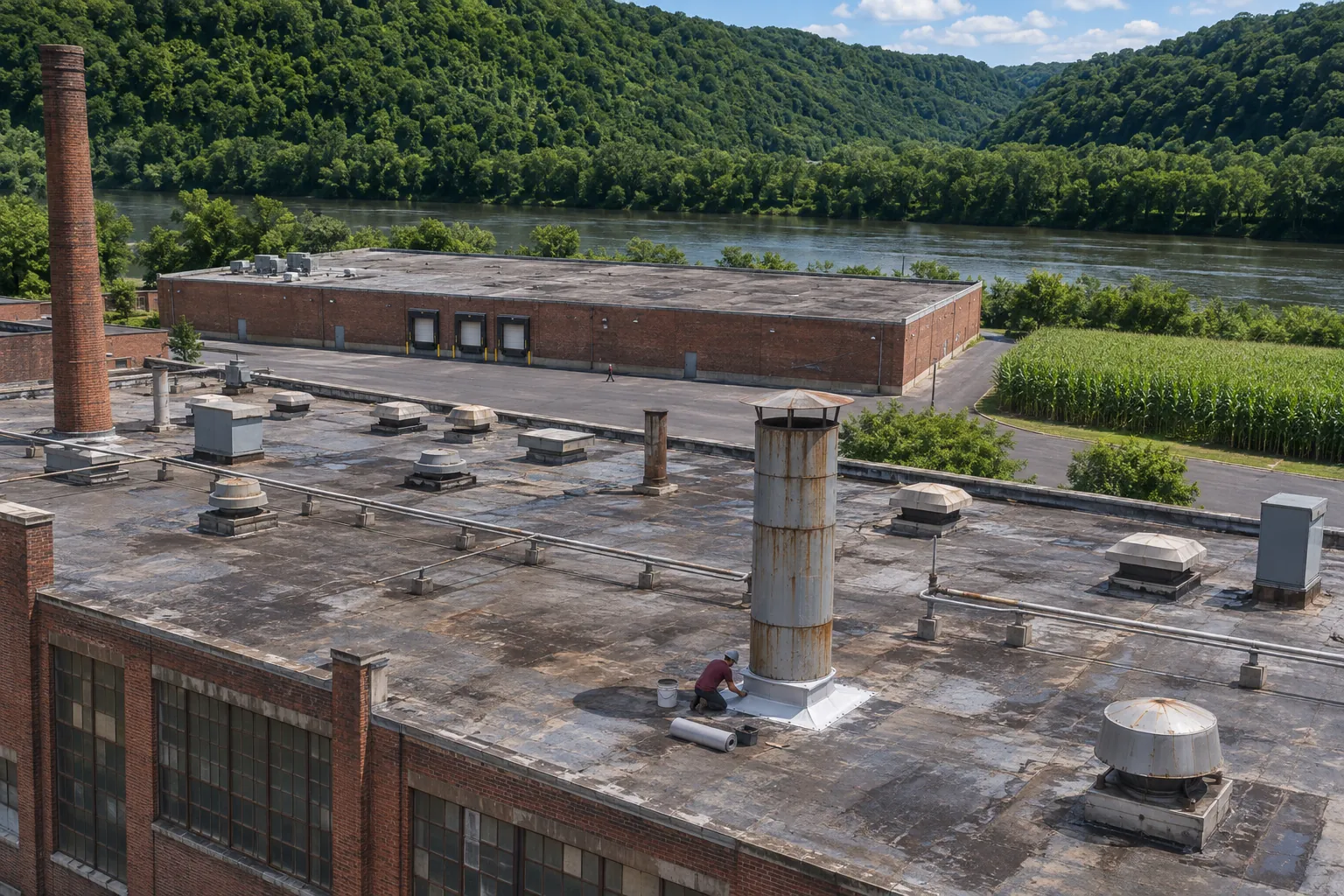
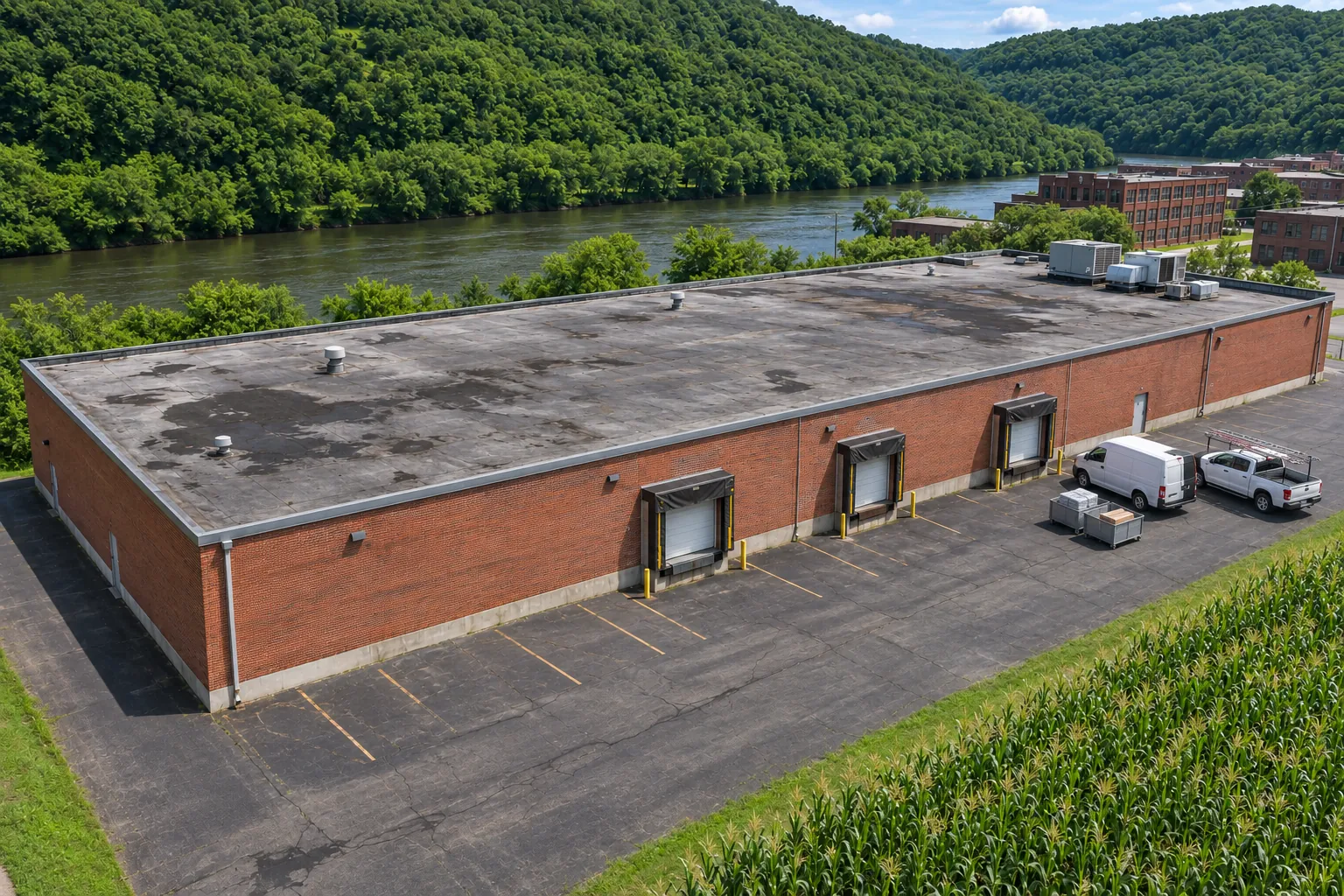
Shared warehouse valleys checked across property lines.
West Mifflin commercial roof repairAnswers for shop and office owners on the busiest streets.
Often yes, when roof access and overhead work can be kept apart from where customers walk. We review staging and the repair location before setting the work zone. Some restrictions can still be needed, so the access plan follows the actual roof work instead of assuming every entrance stays open.
That depends on the leases and the ownership of each building. We document where the water enters the roof and which section it crosses, so owners and tenants can settle responsibility with a clear record in hand instead of guessing from the ceiling stains.
Clogged or undersized scuppers hold water against the parapet until it finds a joint in the coping or the flashing. Clearing and reflashing the scupper, then checking the coping above it, ends most leaks along a storefront wall.
Yes, brackets and conduit fastened through a parapet or roof edge can open holes as the hardware loosens. We trace whether water follows the sign hardware into the wall, then seal or reflash each penetration so the sign stays put and the wall stays dry.
Early mornings and closed days suit edge and entrance work best. Field repairs away from the door can run during business hours, with materials staged at the rear of the building and carried up away from customers.
A repair can stop at a section line when the water enters on that section. We check the neighboring roof edge and any shared parapet or scupper first, since water on a connected roof run often starts next door and travels along the wall.
Send the address and which doors need to stay open. We walk the roof and plan the repair around your entrances.