Running Lines
Isolated work zones keep production going under the roof sections not being repaired.

As a Pittsburgh industrial roof repair contractor, we repair plant and fabrication shop roofs around stacks, fans, and drains while production keeps running below.
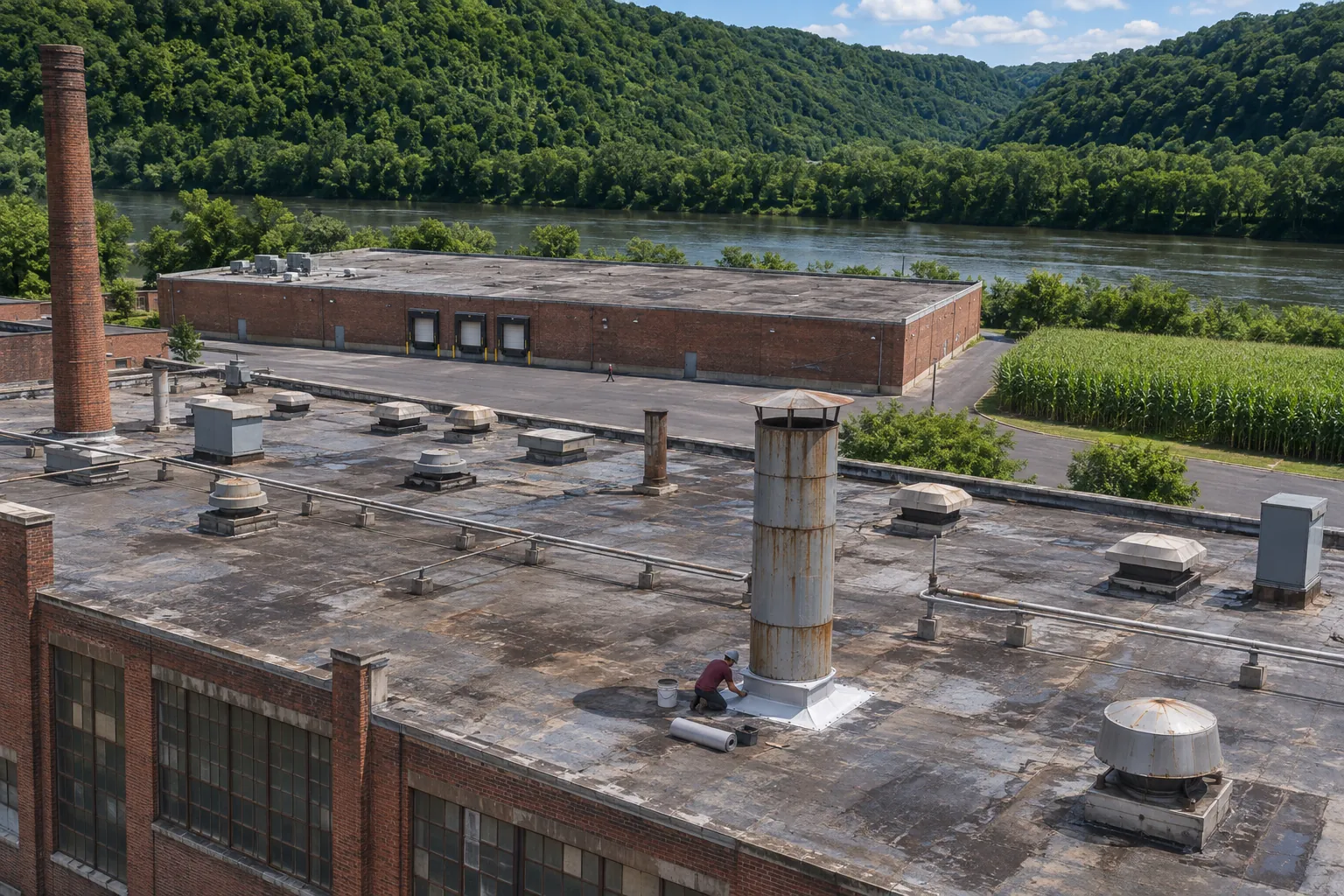
Pittsburgh industrial roof repair fits plants where damage sits around equipment and drains. Here is when repair fits and when bigger work enters the plan.
| Roof Detail | Repair Fits | Plan Further Work |
|---|---|---|
| Equipment curbs | A few cracked curbs or loose flashing | Most curbs rusted or undersized |
| Stacks | Failed flashing at one stack | Heat or residue damage across the roof |
| Drains | One drain with wet insulation around it | Drains sitting high on sagging deck |
| Old openings | Unused curbs removed and rebuilt | Many openings with rotten deck edges |
| Membrane | Firm around the repairs | Brittle from exhaust residue everywhere |
Plant roofs fail first where equipment, heat, and water meet.
Heat and vibration open the flashing at stack bases, letting water run down beside the pipe.
Rings around a drain and soft insulation nearby mean the drain and its board both need work.
Oily or chemical residue softens some membranes, so patches near fans need compatible material.
Old equipment curbs left capped keep flashing details to maintain for no reason.
Drips over machinery or product get a temporary seal and a traced repair planned with staff.
Metal sections over hot or humid processes rust from the inside, showing first at laps and fasteners.
Each plant roof repair is planned around the equipment and the floor below.
Flashing at stacks and curbs is rebuilt to the deck with materials rated for the heat and residue there.
Wet board around the drain comes out, the deck is checked, and new flashing sits on level insulation.
Repeat leaks get compared with roof records, equipment work, and weather before any earlier patch is replaced.
Old exhaust curbs come off and the deck, insulation, and covering are rebuilt across the opening.
Netting, covers, and marked drop zones protect product and people under each roof section while repairs above are underway.
Membrane around working fans gets patched with residue-tolerant material and checked again at the next roof walk.
Repairs planned with plant staff protect product, machinery, and schedules.
Isolated work zones keep production going under the roof sections not being repaired.
Rebuilt stack and curb flashing stops the drips that follow equipment changes.
Level drains and dry insulation move water off before it finds a seam.
Removing dead curbs leaves fewer roof details to inspect and maintain.
Planned roof routes keep workers away from hot stacks and active exhaust.
Wet board found around drains and curbs comes out before it rots the deck.
Repairs are logged against each curb and stack, so future equipment work starts informed.
Materials chosen for exhaust residue hold up near fans that soften ordinary membranes.
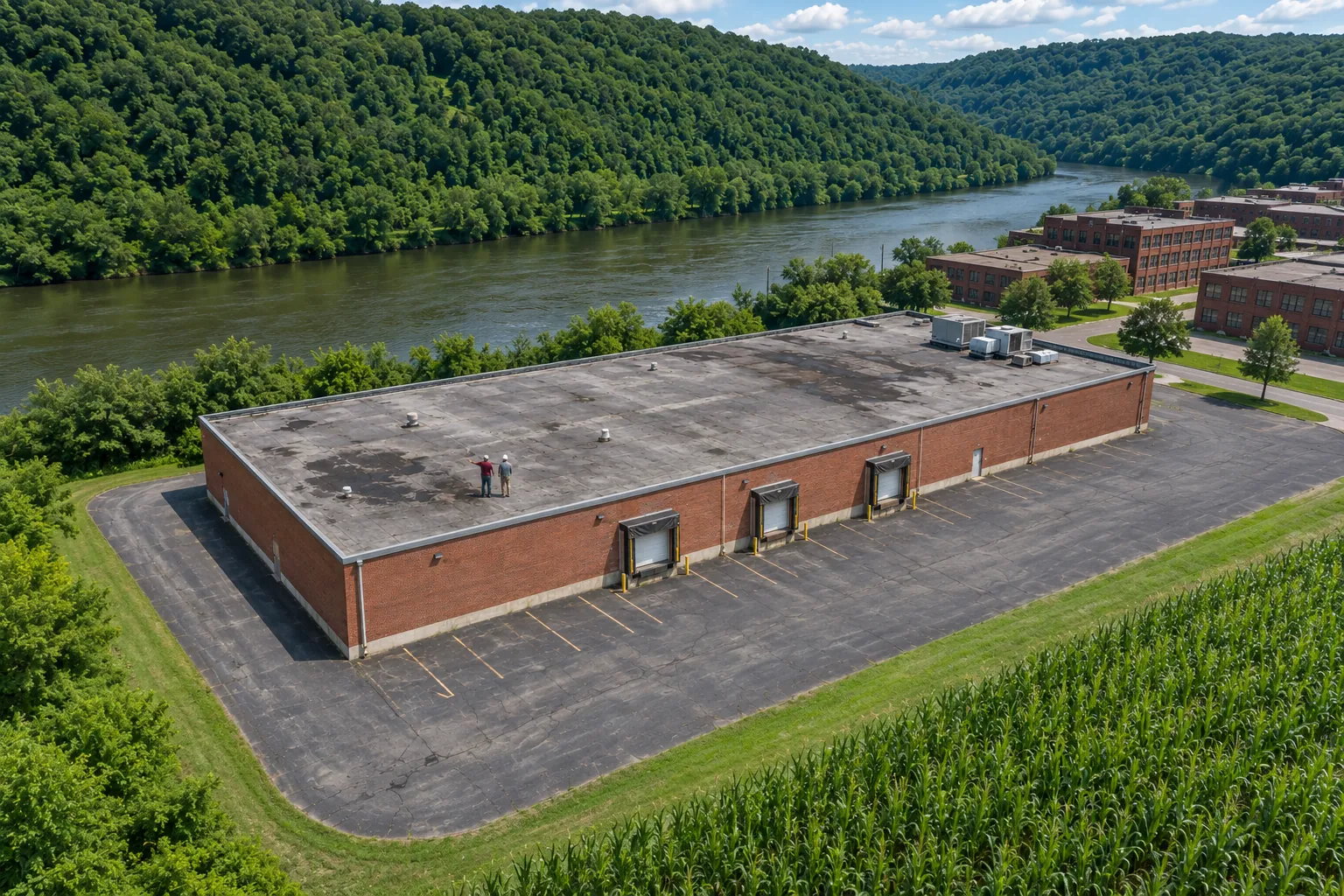
Call with the line affected and how to reach the roof. We trace the source and plan the repair around production.
Get A Free EstimatePlant roof repairs start with the people running the floor.
We review production limits, safe access, and recent equipment work before going up.
Stacks, curbs, fans, and drains near reported leaks are checked and photographed.
Core cuts near drains and curbs show how far water spread under the covering.
Debris control, access routes, and weather protection are set over the active lines.
Flashing, drains, and openings get rebuilt, then each repair is photographed and listed.
Plants often mix roof types and leak sources.
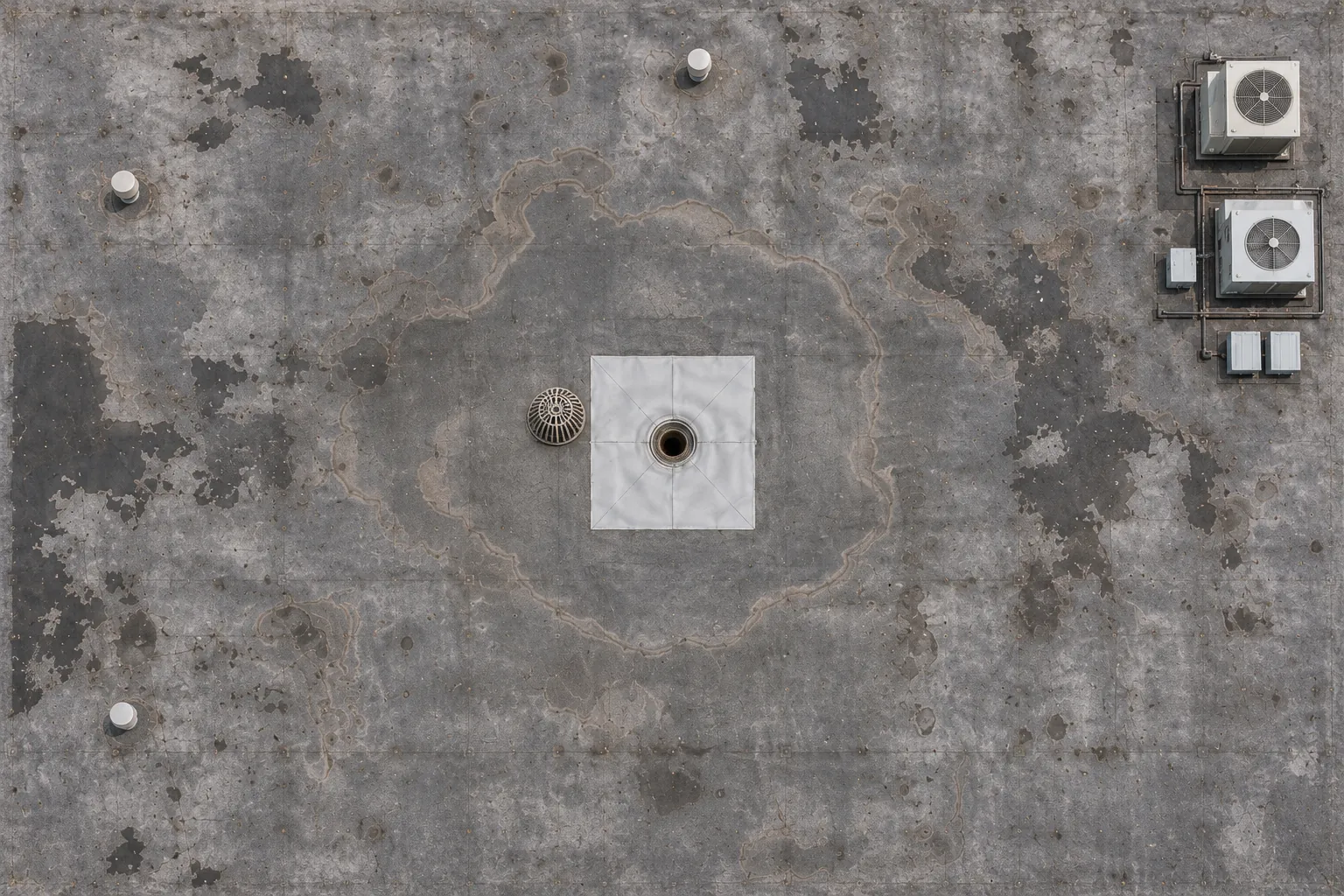
Membrane sections between plant roof equipment.
Flat roof repair in Pittsburgh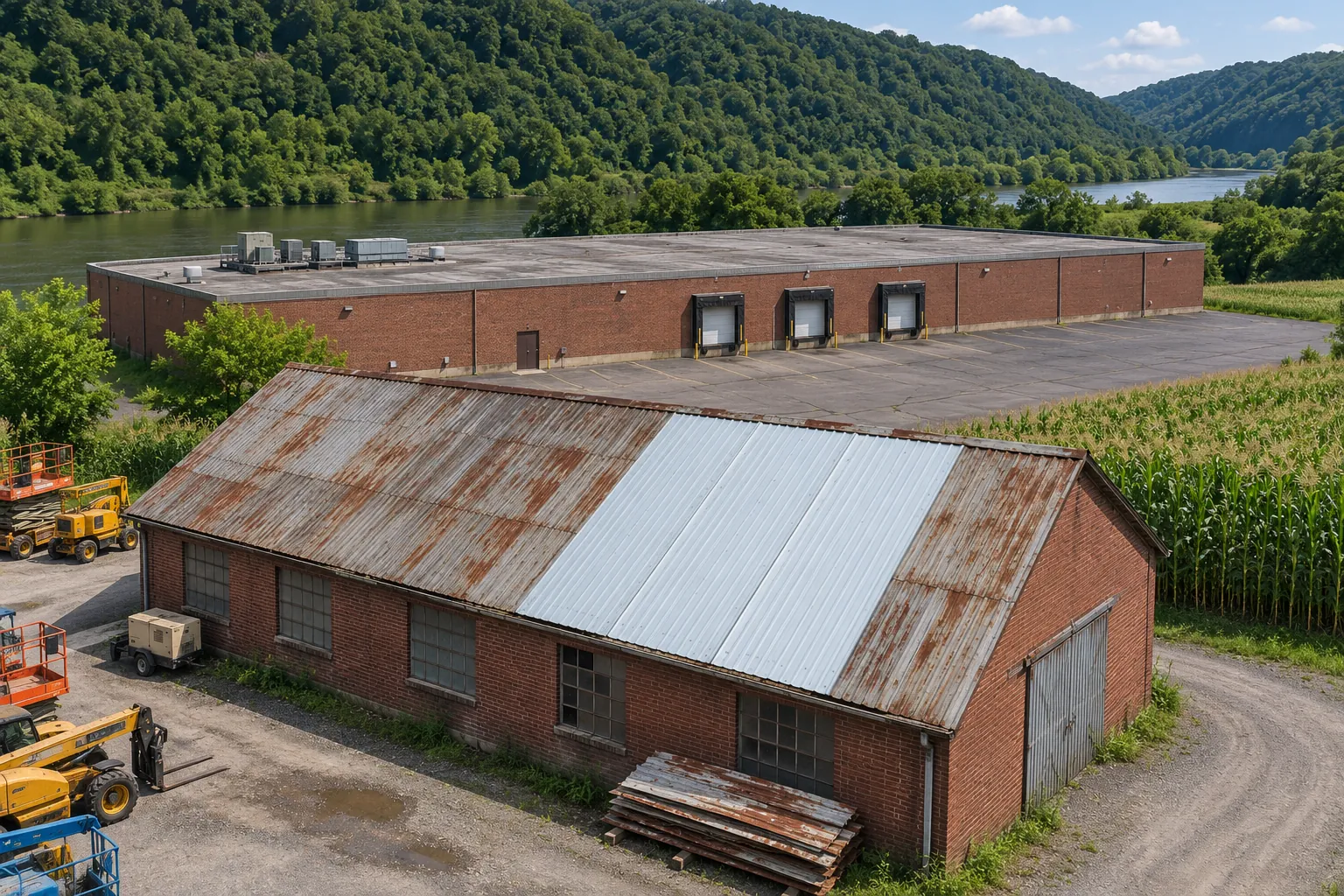
Metal warehouse wings attached to the plant roof.
Commercial metal roof repair in Pittsburgh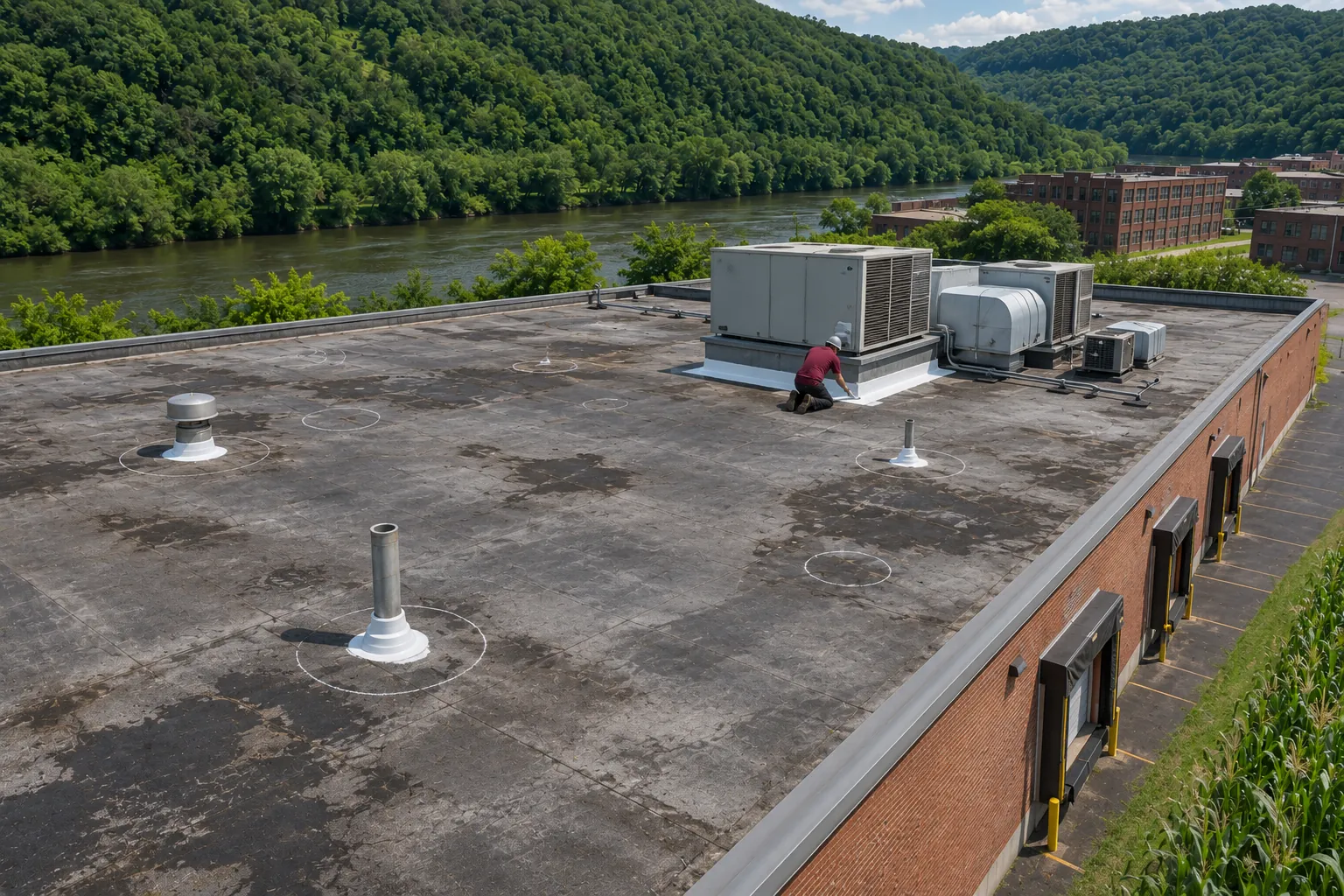
Repeat roof drips that need tracing first.
Commercial roof leak repair in PittsburghAnswers about getting started, keeping lines open, drains, and repeat leaks.
Leak locations, roof records, and any production restrictions help most. We also ask about recent equipment work and when the interior moisture appears. Those details plan access and point the inspection, while the final repair scope comes from the condition found on the roof.
Often yes, when the roof work can be isolated and the area below protected. We plan debris control, access, and weather protection with plant staff before setting the sequence. Repair boundaries can cross production zones, so the plan follows the roof construction as well as the floor layout.
Water damages the insulation around a failing drain connection. We find the edge of the wet area and check the deck before rebuilding the drain. New flashing set on wet or crushed insulation causes drainage and attachment trouble, so the scope covers the surrounding area when findings call for it.
Compare when and where each leak appears with roof records and current conditions. We inspect earlier repairs and also check nearby equipment, drains, and wall details. New water can come from another source or from moisture already inside, so the likely paths get tested first.
Usually, because a capped curb keeps a flashing detail to maintain with nothing gained. Removal needs a full plan for rebuilding the deck, insulation, and covering across the opening, set before the unit comes off.
Only the work that truly needs the line stopped, such as repairs right over an open process or a hot stack. Most drain, curb, and membrane repairs run during production with work zones and floor protection. The scope marks which items need a shutdown window.
Yes, on routes to equipment that gets serviced often. Pads spread foot traffic and dropped tools away from the membrane, which cuts down on punctures around fans, curbs, and drains.
Tell us about the plant, the leak, and the lines below it. We plan access with your staff and repair around production.