Faster Drainage
Rebuilt drains clear the ponding rings that freeze, thaw, and slowly open nearby seams.

As a Pittsburgh flat roof repair contractor, we fix seams, blisters, and drain flashing on membrane and built-up roofs, starting with where the insulation is wet.
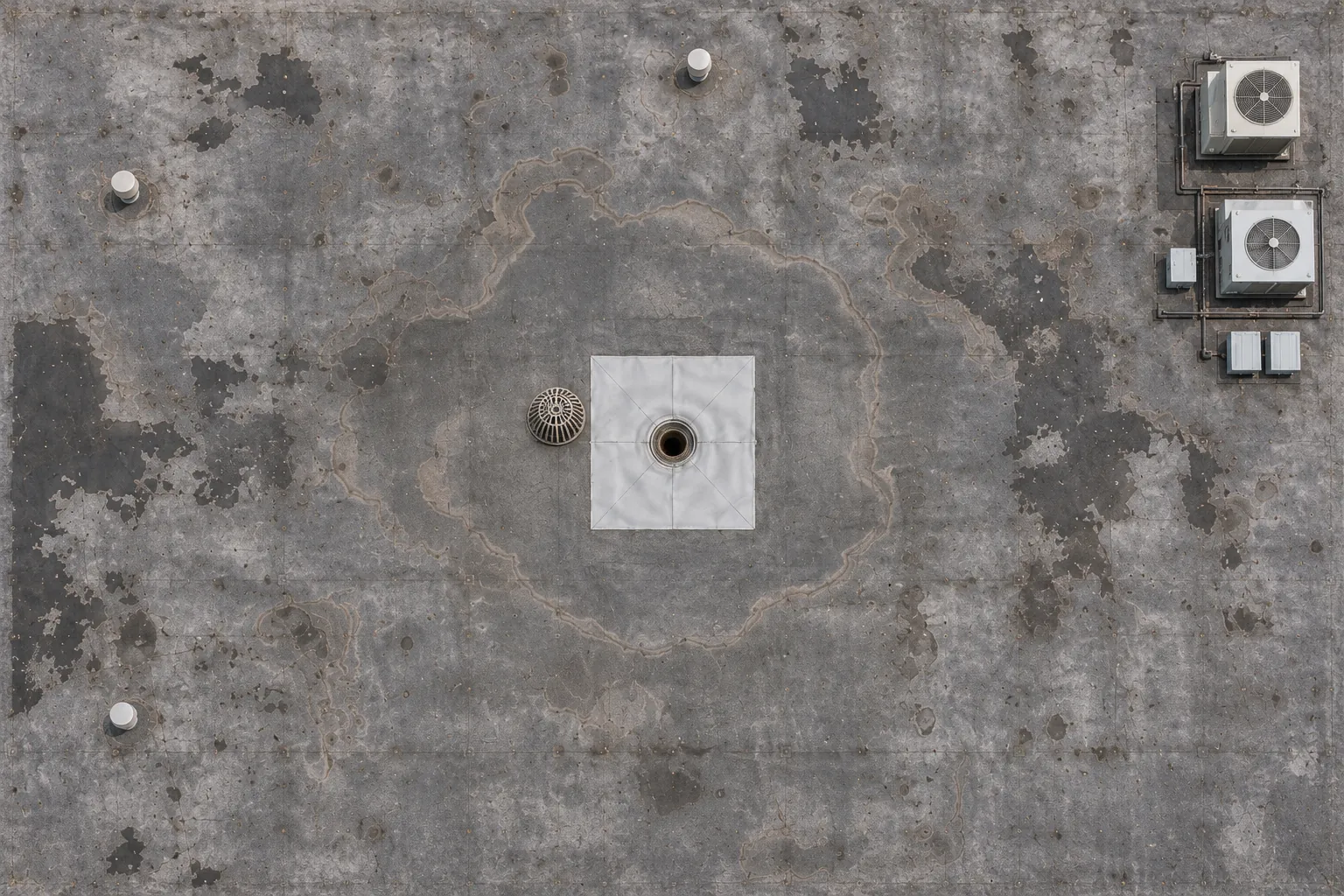
Pittsburgh flat roof repair fits roofs where damage stays in bounded areas. This table shows when a repair fits and when more work belongs in the plan.
| Roof Detail | Repair Fits | Plan Further Work |
|---|---|---|
| Seams | A few open laps on firm membrane | Laps opening along most runs |
| Blisters | Intact blisters with dry cores around them | Cracked blisters over wet insulation |
| Drains | One drain with failed flashing | Drains set high above crushed insulation |
| Insulation | Wet boards inside one bay | Wet readings across several bays |
| Membrane | Flexible and fully adhered around the damage | Brittle, shrinking, or pulling at edges |
Each sign points to a different part of the flat roof and a different repair.
Hard rain backs water up at a slow drain or a low corner until it reaches flashing that light rain never touches.
Soft bubbles near a drain are left closed when they are intact, and opened only when cracks or moisture show the assembly is failing.
Seam edges that curl or open let wind push water sideways under the membrane, far from where it drips inside.
Spongy areas underfoot usually mean wet insulation, so cores come before any patch.
Water over stock or equipment gets a temporary seal first, with the traced repair to follow.
The method follows the problem the roof walk found.
Mixed coverings get repairs matched to each system, with transitions built so every patch reconnects to compatible material along its whole edge.
Old flashing and wet insulation around the outlet come out, the deck is checked, and new flashing sits on level board at the right height.
Intact blisters stay closed and get monitored; damaged ones are cut, dried, and closed with a planned, compatible cover.
Shaded roofs get checked for surface dryness and temperature against the material limits, with temporary protection when full work has to wait.
Repairs aimed at the cause keep the next storm from finding the same weak spot.
Rebuilt drains clear the ponding rings that freeze, thaw, and slowly open nearby seams.
Replacing wet boards keeps hidden water from spreading under the patch into the next bay.
Welded or adhered patches seal the laps that wind-driven rain was getting under.
Owners see exactly which areas were repaired and which are left on watch.
Water drained off before a freeze stops ice from prying laps and flashing apart.
Patches done section by section keep docks and aisles under the roof in use.
Reflashed curbs at rooftop units close a common source of drips over offices.
Finished repairs are photographed, so the next roof walk starts from a known point.
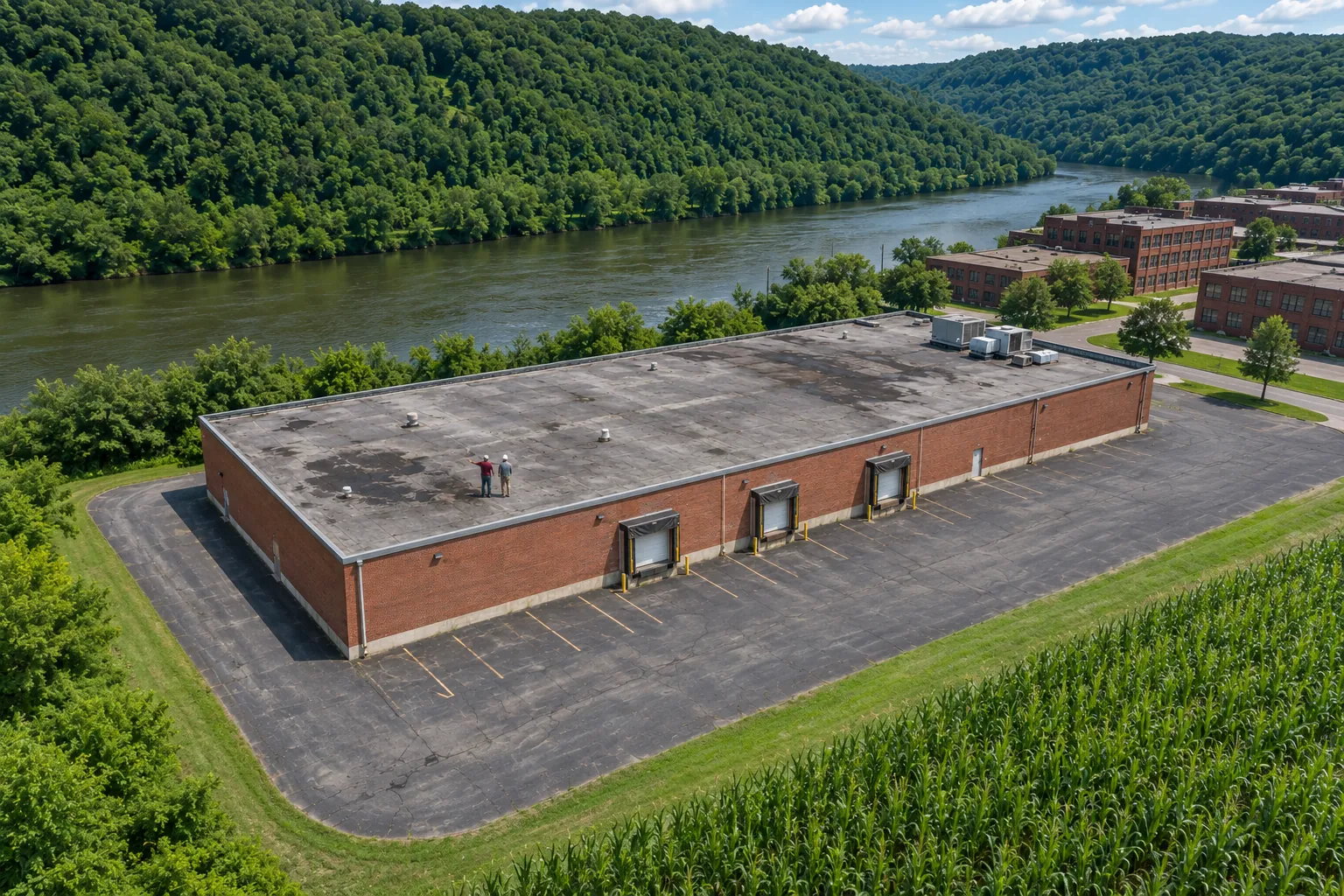
Send the address and a photo of the ponding or ceiling stain. We check the drains and cut cores before writing the repair.
Get A Free EstimateFive steps take a flat roof from a reported drip to a tested repair.
We walk every lap, drain, and curb near the reported leak and mark blisters, splits, and ponding rings.
Small cores show which insulation is wet, which sets how far the repair must reach past the visible damage.
Soaked boards come out down to the deck, and soft deck areas get flagged before new insulation goes in.
New membrane matched to the existing system laps onto clean, dry surface on every side.
Drains and repaired laps get water-tested where practical, then photographed for your records.
Flat roofs rarely stand alone; these repairs often come up on the same building.
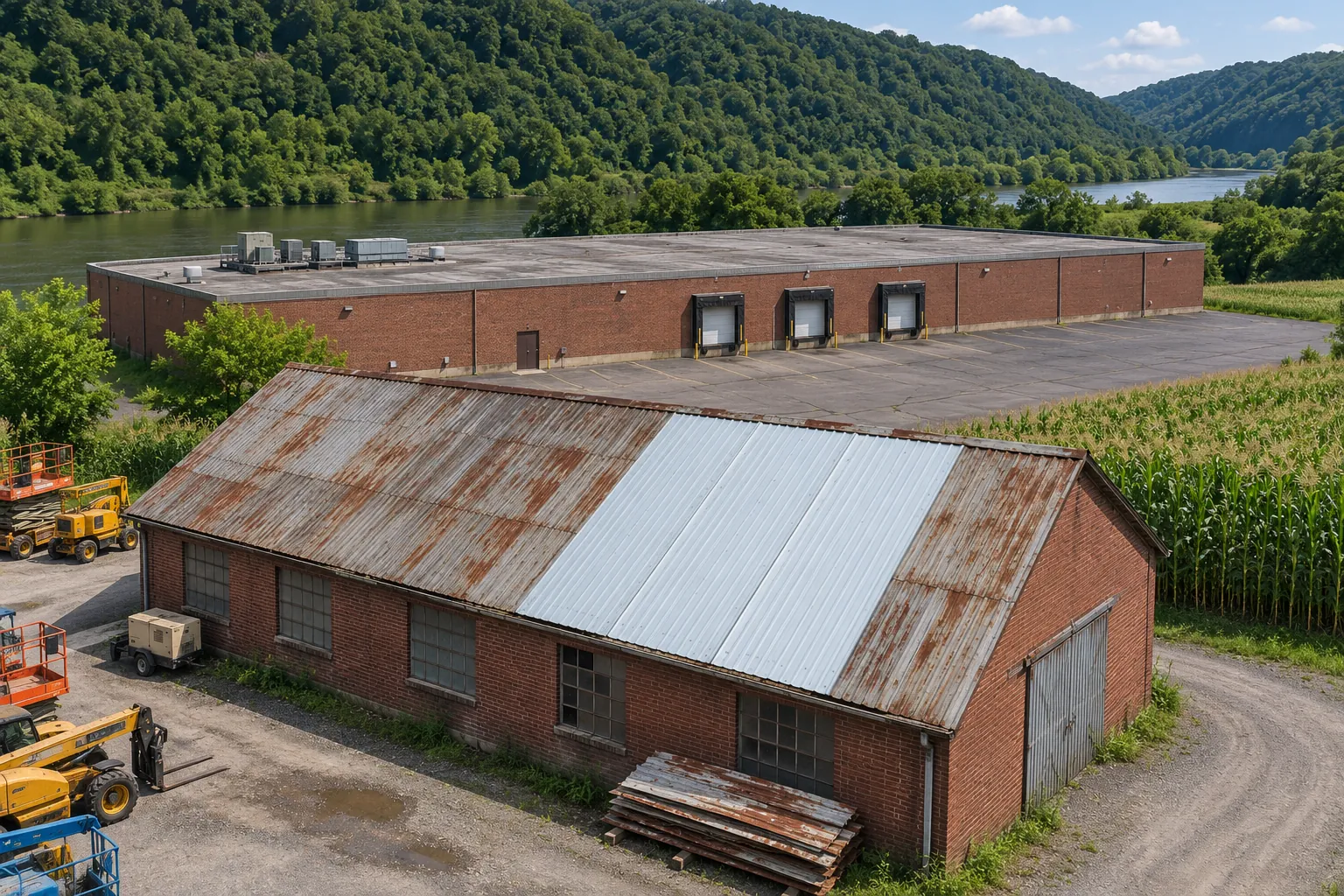
Metal shop wings beside a membrane warehouse.
Commercial metal roof repair in Pittsburgh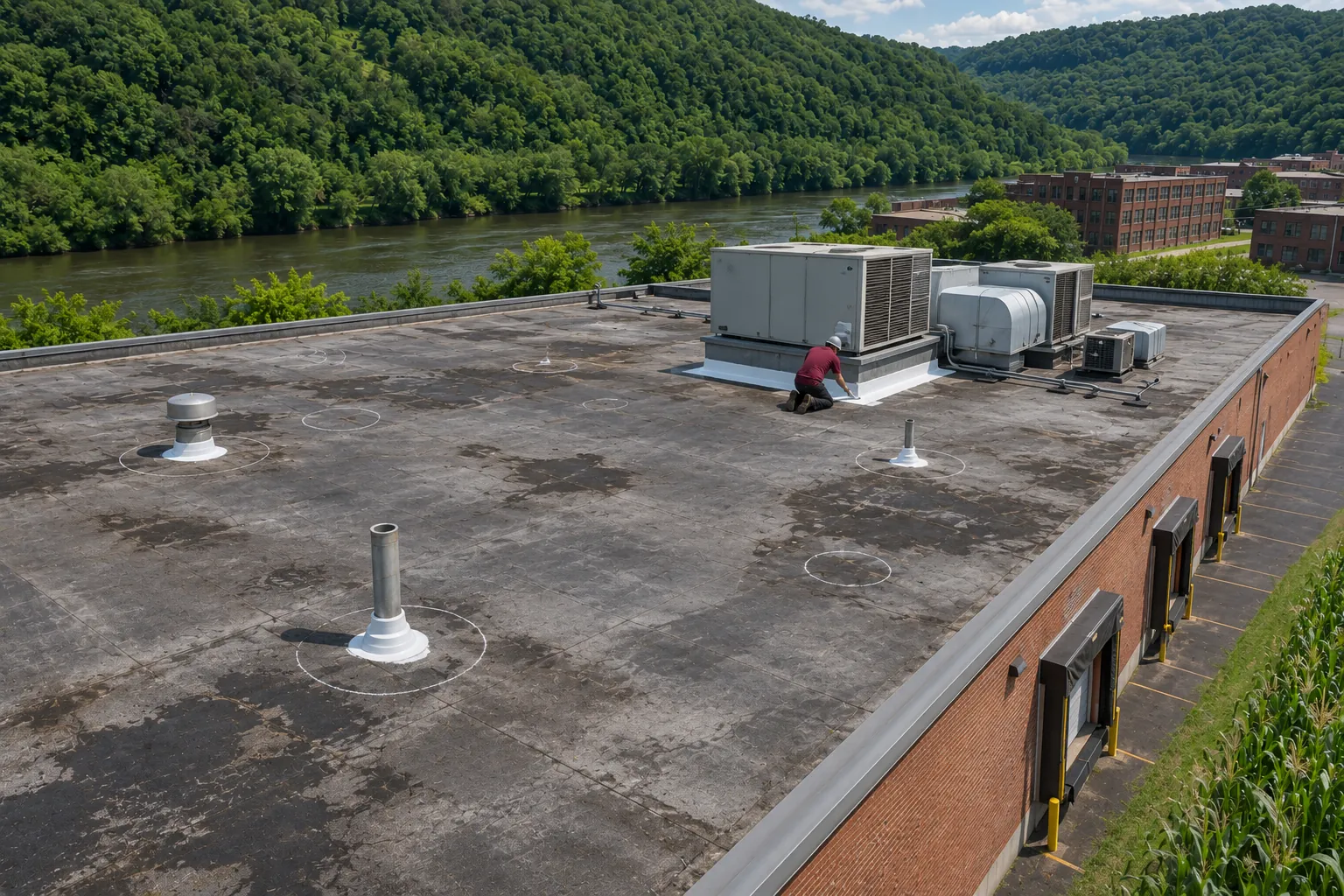
Drips sitting far from any visible roof defect.
Commercial roof leak repair in Pittsburgh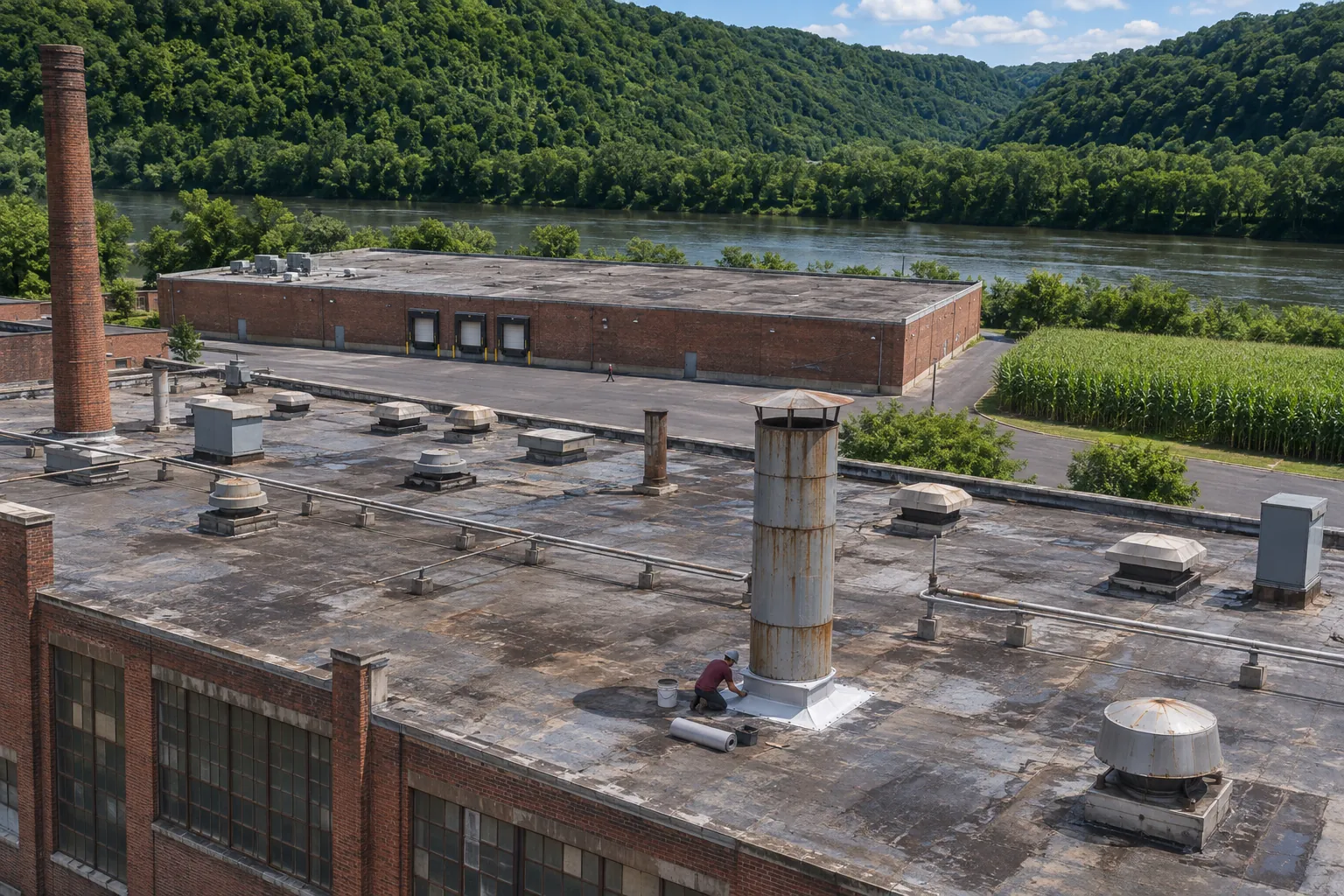
Plant roofs crowded with stacks, fans, and curbs.
Industrial roof repair in PittsburghAnswers about mixed roofs, blisters, winter repairs, and heavy-rain leaks.
Match the repair to each covering and to every transition between them. We identify each roof system and inspect older patches before choosing details. One general patch product across surfaces that need different preparation or seam construction leaves weak edges, so each repair reconnects to compatible material all the way around.
Look further when the blister has cracked, shows foot traffic damage, or sits over wet readings. We check the roof system and the nearby drain detail before deciding what to open. Cutting an intact blister without a planned, compatible closure only adds a new place for water to get in.
Sometimes, if the actual roof surface is dry and warm enough for the chosen materials. We check the work area itself, since street-level conditions and a sunny neighboring roof tell you little. Safe access and a weather window decide the timing, and temporary protection covers the gap when full work has to wait.
Heavy rain reaches flashing defects and slow drains that lighter rain never touches. We check outlets, low areas, and roof transitions while tracing the water showing up inside. Covering the spot right above the drip misses water that enters elsewhere and travels through the roof assembly.
It depends on what sits around it. A patch lapped onto dry, flexible membrane over dry insulation holds as long as the membrane around it. A patch laid over wet boards or brittle membrane fails early, which is why cores and an edge check come first.
Water still sitting a couple of days after rain points to a drain or low-spot problem worth fixing. Ponding speeds membrane wear, adds weight, and freezes into ice that pries at laps. We find why it stays, whether a clogged strainer, a high drain, or crushed insulation, and repair that cause.
Tell us about the ponding, blister, or drip. We cut cores, find the wet area, and repair it back to dry membrane.