Fewer Openings
Each removed curb is one less roof flashing detail to inspect and repair.

As a New Castle commercial roof repair contractor, we repair fabrication and plant roofs, removing unused exhaust equipment and rebuilding each opening into the roof.
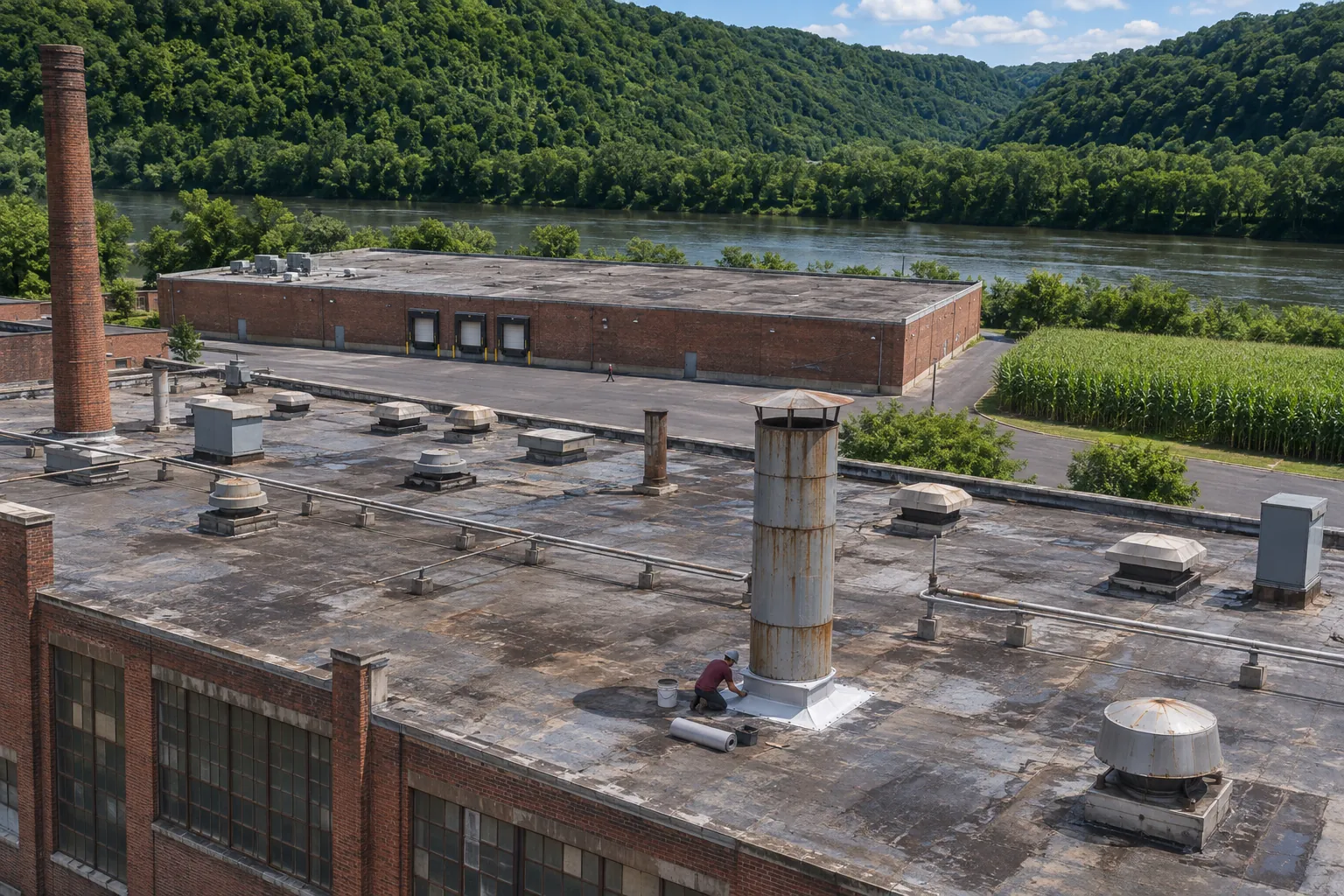
New Castle commercial roof repair on older plants often starts with exhaust fans and curbs that no longer serve the floor below.
A capped curb still has flashing, a cover, and seams that need upkeep. Taking the unit and curb off and rebuilding the opening removes a roof detail that only adds leak risk.
Removal is coordinated with plant staff and any electrical or duct disconnects. Deck, insulation, and covering connections are planned before the unit comes off, so the opening is closed into the roof around it.
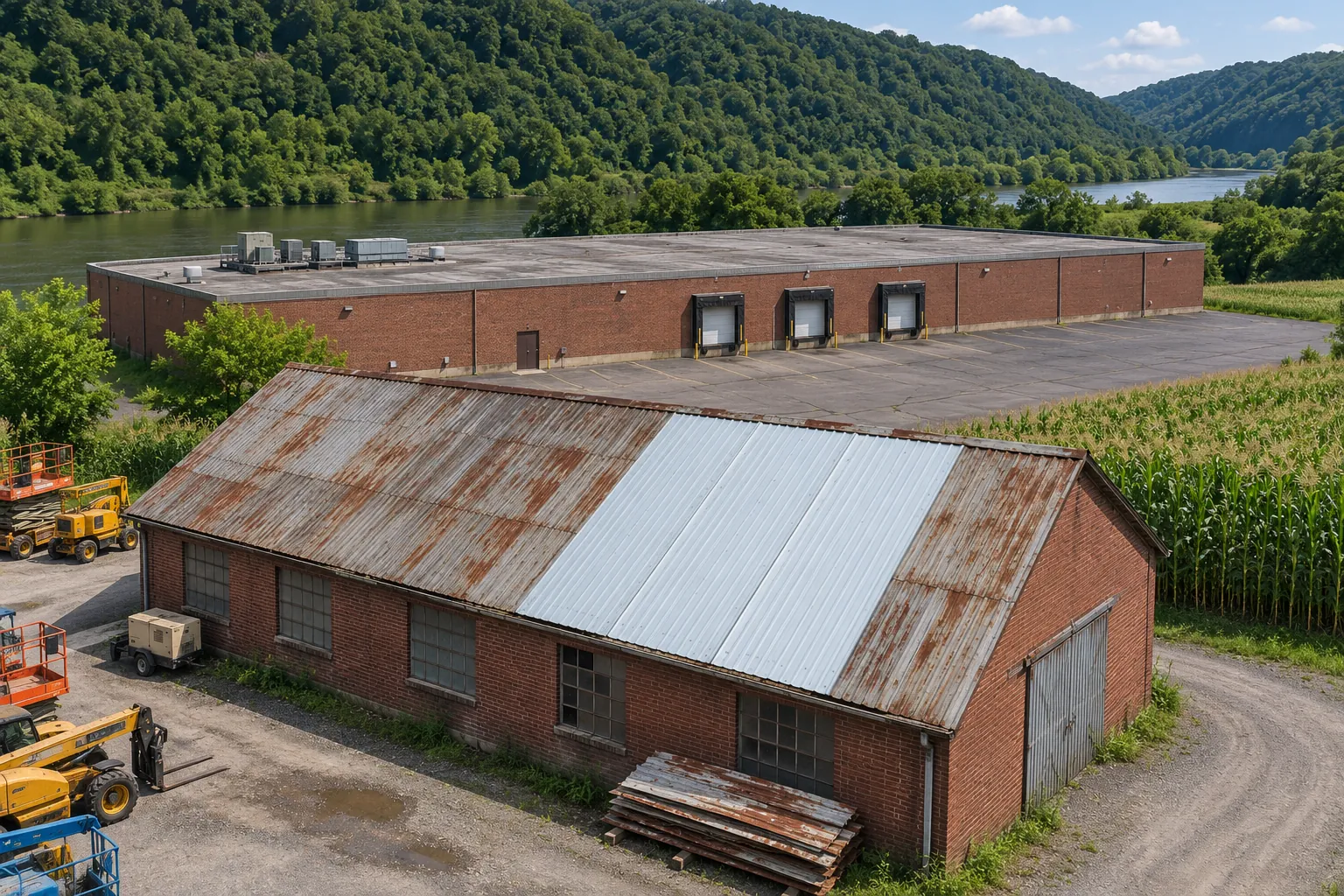
Older plant roofs collect equipment, openings, and patches over the years.
Curbs left after a fan was removed keep their flashing and cover, and both wear out with nothing gained.
Stack bases rust where condensate and rain sit against the collar, opening a ring around the pipe.
Exhaust residue softens some membranes near fans, so patches there need materials that tolerate it.
Rows of curbs block water on its way to the drain and leave long ponds between them.
Water near welding stations or electrical gear gets a temporary seal while the source is traced.
Decks around long-capped curbs rust or rot from slow leaks and show up as soft spots underfoot.
Fewer openings and tighter flashing mean fewer leaks over the shop floor.
Each removed curb is one less roof flashing detail to inspect and repair.
Clearing dead equipment opens drainage paths between the remaining curb rows.
Removal and roof repairs are sequenced around shifts and active lines.
Marked roof plans show which openings were closed and which remain.
Rebuilt stack collars close the rings that let rain run down beside the pipe.
Fewer dead units leave clearer walking paths for anyone servicing the roof.
Wet insulation around old openings comes out before it rusts the steel deck.
Patches near working fans use materials that hold up to exhaust residue.
Methods for roofs where equipment, heat, and cranes shape the work.
Fans and curbs come off, the deck edge is checked, and new deck, insulation, and covering close the opening.
Rusted collars are cut back and the stack is reflashed to the deck with heat-rated material.
Repairs over crane bays get timed with crane lockouts so nothing moves below the roof section being worked.
Low spots between equipment rows get tapered insulation or crickets so water reaches the drain.
Each removed unit, closed opening, and repaired stack gets marked on the roof plan, so the next plant project starts with an accurate drawing.
Drains crowded by equipment curbs get rebuilt with level insulation, so water stops pooling against curb flashing.
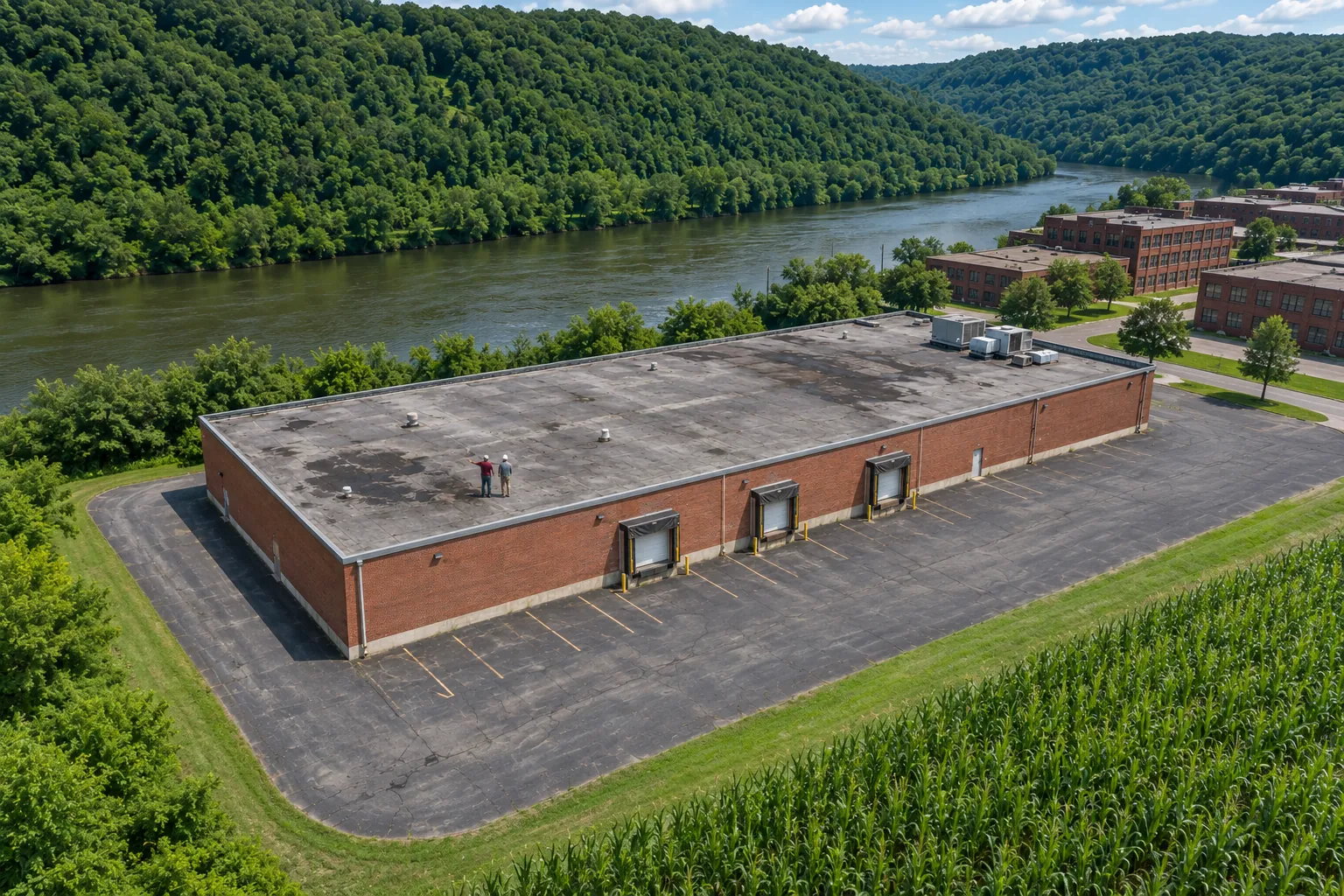
Send a list or photos of unused roof equipment. We plan removal with your staff and close each opening into the roof.
Get A Free EstimateFour steps take an unused unit off and close the roof behind it.
We confirm with plant staff that power, gas, and ducts to the unit are shut off and capped.
Opening the curb lets us inspect the deck around it for rust, rot, or soft spots.
New deck, insulation, and covering go in, tied to the surrounding roof on every side.
Closed openings are water-tested where practical and marked on an updated roof plan.
New Castle is one of five towns we serve beyond Pittsburgh. For other addresses, please call us or send us a message.
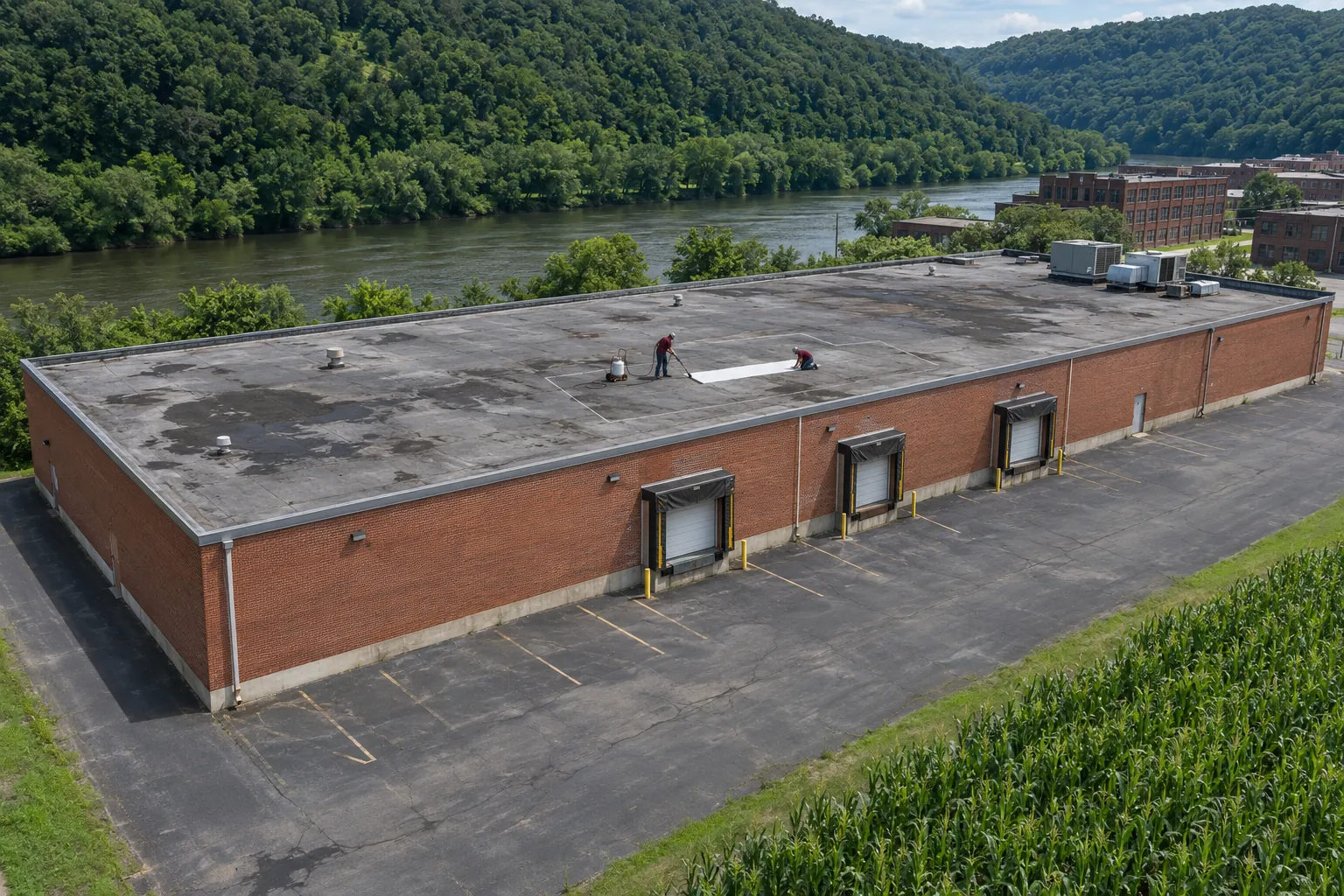
Warehouses, shops, and hillside blocks across the city.
Pittsburgh commercial roof repair
Shared warehouse valleys checked across property lines.
West Mifflin commercial roof repairAnswers for plant managers and owners of older fabrication buildings.
Yes, as long as the opening left behind is properly rebuilt. We coordinate the removal and set the deck, insulation, and covering connections in advance. Capping the old curb keeps a detail that needs upkeep, while removal needs a complete plan for closing the roof.
Crane lockouts and floor schedules set the windows for roof work above the bay. We mark the roof section over the crane path, protect the floor below, and finish each section before the crane returns to service.
Some residues soften certain membranes over time. We look for soft or swollen membrane near fans and stacks, then choose patch materials that tolerate what the exhaust carries, so the repair outlasts the next season of production.
Heat and fumes rising to the deck can speed corrosion on steel decks and fasteners in older plants. Core cuts and deck checks near hot work areas show whether the deck needs attention during the roof repair.
Old roof plans, equipment changes, and past repair invoices help most. They show which curbs are live, which were capped, and where leaks came back, so the inspection starts in the right places.
Your plant electrician or mechanical contractor handles power, gas, and duct disconnects before removal. We coordinate the timing with them, then take the unit and curb off and rebuild the roof opening once everything is capped.
That depends on whether the skylight still lights a working area. Cracked domes and rusted curbs get repaired when the light is needed, and unused skylights can be removed with the opening rebuilt like an old fan curb.
Send photos of the unused equipment and any leaks. We plan removal with your staff and rebuild each opening into the roof.