Tight Fasteners
New screws and washers close the small holes behind slow, scattered drips.

As a Pittsburgh commercial metal roof repair contractor, we replace loose fasteners, rusted panels, and failed flashing on metal shops and warehouses.
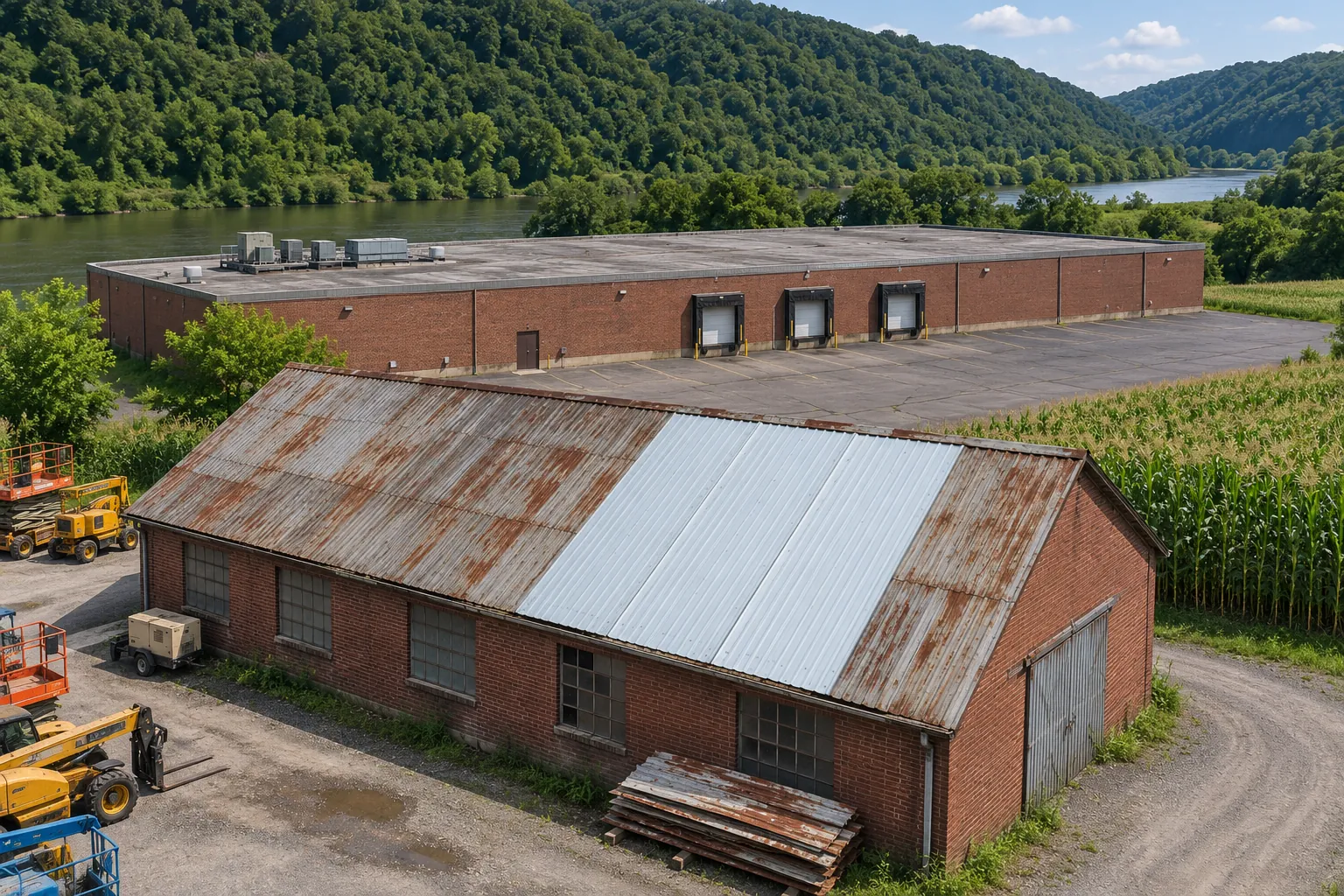
Pittsburgh commercial metal roof repair works while the panels and structure can still hold new fasteners. Here is where repair fits and where more work is due.
| Roof Detail | Repair Fits | Plan Further Work |
|---|---|---|
| Fasteners | Loose screws and worn washers | Screw holes wallowed out across the roof |
| Panels | A few holed or rusted panels | Rust-through along whole eaves or valleys |
| Laps | Open laps with firm metal on both sides | Laps rusted thin on most runs |
| Flashing | Wall or curb flashing at one transition | Every transition failing at once |
| Structure | Purlins firm under the leak | Purlins rusted or sagging |
Metal roofs show trouble at their connections well before the panels wear through.
Fasteners are one common source, and seams, penetrations, and edge flashing cause just as many drips.
Orange streaks at laps mean water sits between panels; caught early, the lap gets cleaned and resealed.
Water entering above flashing at a wall runs behind it and shows inside, well below the roof edge.
Hail can loosen seams and fasteners even when the building stays dry inside.
Leaks near electrical panels or machinery get a temporary seal first, then a trace to the entry.
Snow sliding to the eave packs against trim and closures, and meltwater finds any open lap there.
Each metal roof detail has its own fix.
Backed-out screws come out, oversized screws with new washers go in, and every fastener on the run gets checked.
Holed or rusted panels are replaced with matching gauge and profile, lapped and fastened to the original pattern.
Flashing at a taller wall is rebuilt from the wall above down to the panels, sealing both connections.
Open laps get cleaned to bright metal, sealed with compatible sealant, and stitched tight.
Tight connections keep water off purlins, stock, and machinery.
New screws and washers close the small holes behind slow, scattered drips.
Replacing rusted panels stops holes from spreading to the panels beside them.
Rebuilt wall flashing keeps water out from behind the trim and off interior walls.
Recorded repairs show whether problems stay local or spread over the years.
Post-storm checks catch loosened seams and fasteners before the next rain finds them.
Stopping lap drips keeps water off racks, pallets, and machinery below the panels.
Sealed laps and tight trim hold up better through freeze-thaw swings and drifting snow.
Keeping water off the framing slows rust on purlins and clips under the roof.
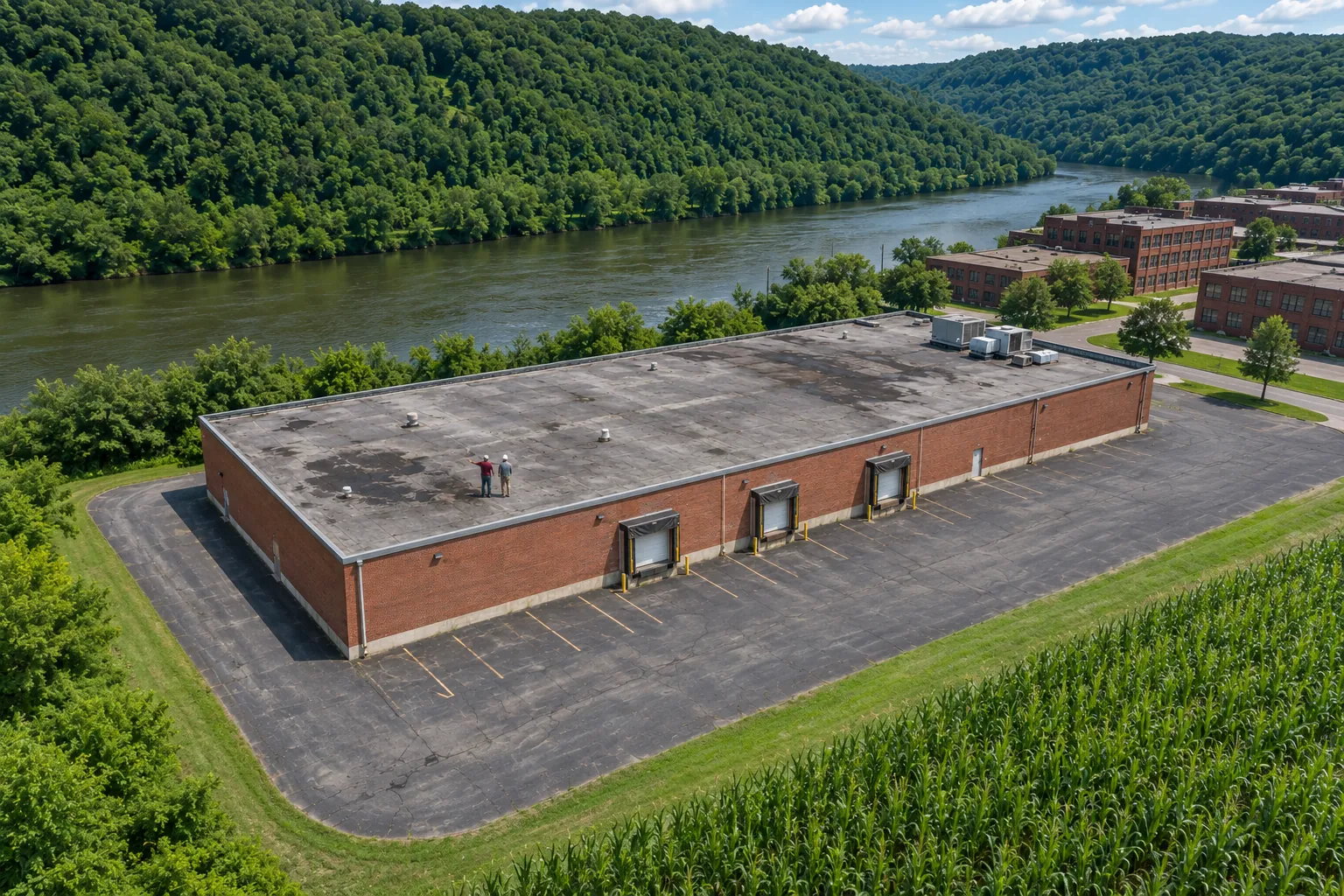
Send the address and photos of the stains or rusted laps. We check fasteners, laps, and flashing along the whole run.
Get A Free EstimateMetal roof repairs follow the connections, run by run.
We walk each panel run, testing fasteners and marking open laps, rust, and loose trim.
Panel gauge and rust depth decide whether a lap gets sealed or the panel gets replaced.
Wall and curb flashing is inspected above the visible defect to find the real entry path.
Replacement panels, screws, and sealant go in following the original fastening pattern.
Each repaired run is photographed so later inspections can compare against it.
Metal buildings often connect to other roofs and other problems.
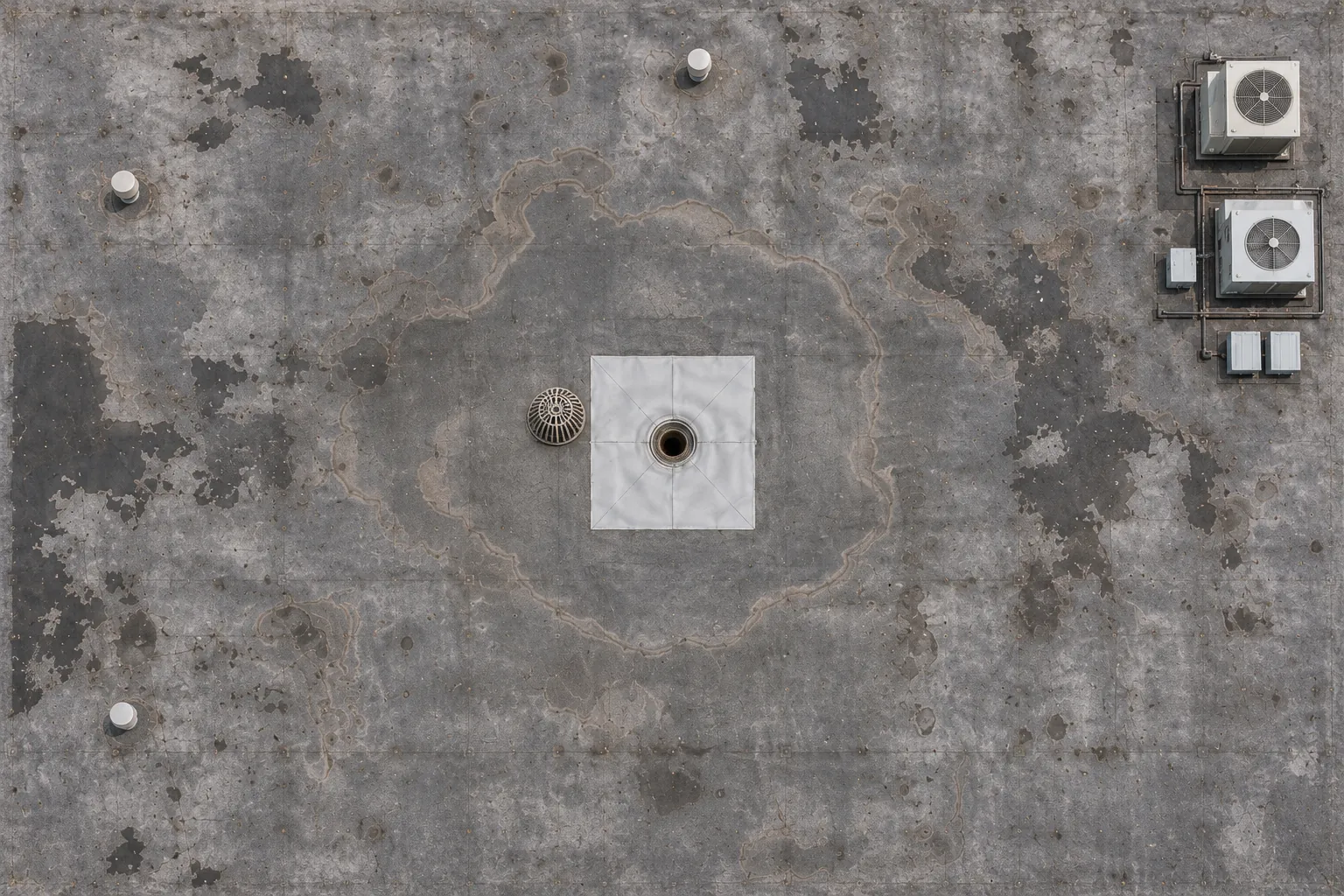
Low-slope membrane roofs joined to metal buildings.
Flat roof repair in Pittsburgh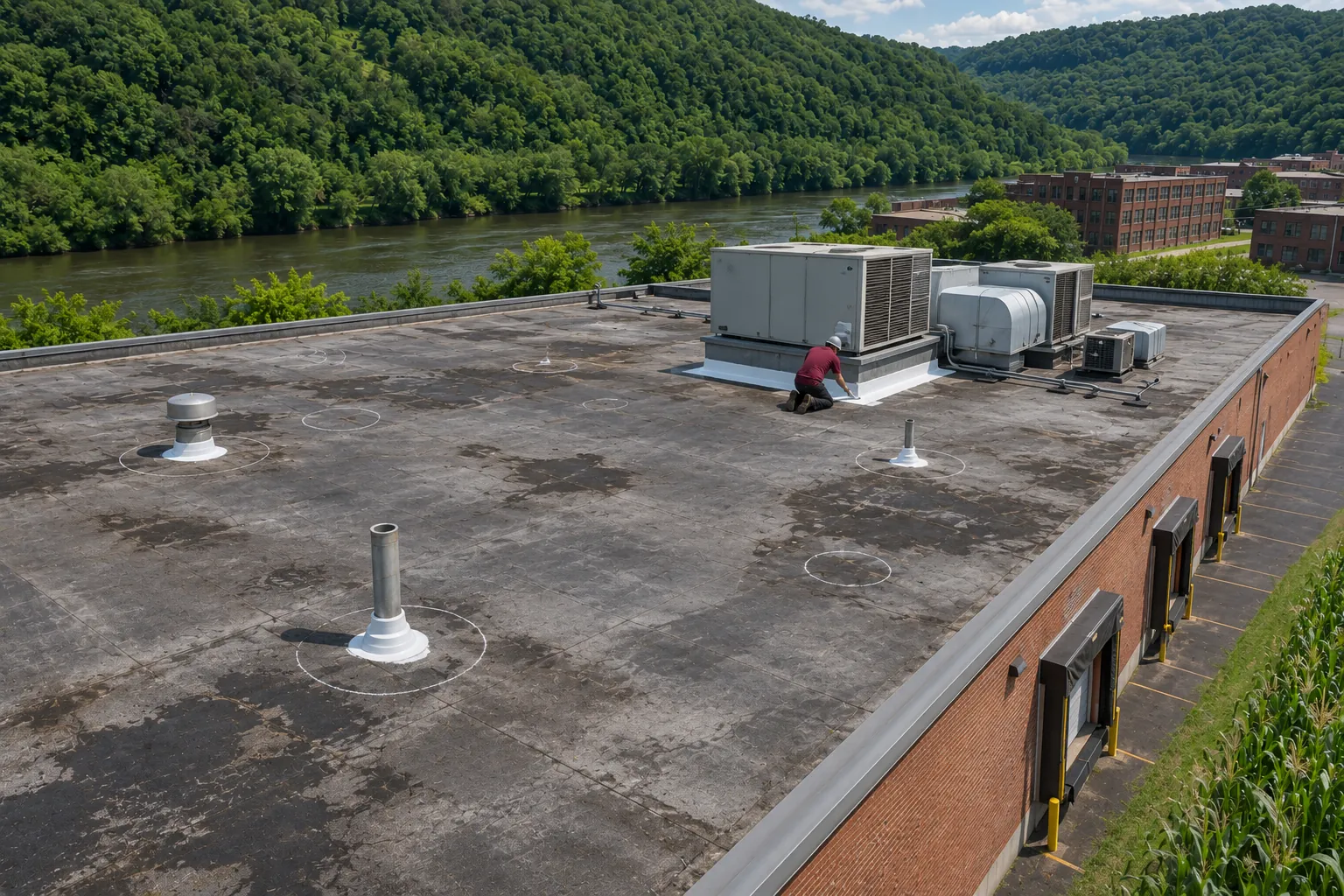
Roof water that shows only in snowmelt or wind.
Commercial roof leak repair in Pittsburgh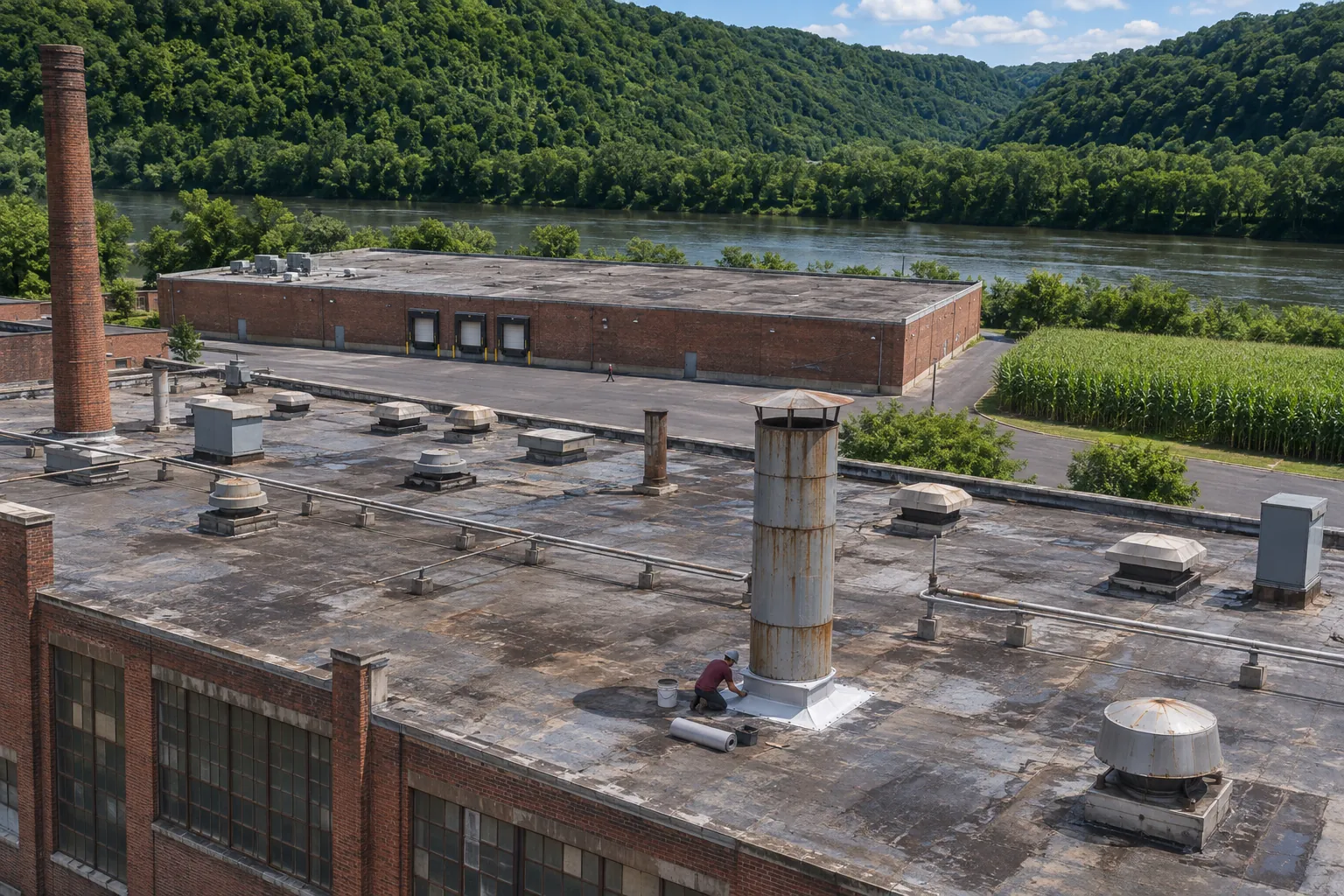
Fabrication shops with exhaust curbs through the panels.
Industrial roof repair in PittsburghAnswers about life expectancy, wall flashing, hail, and where metal roofs leak.
It shows whether failures stay local or are spreading across the roof. We compare old repair records with the current panels, fasteners, and flashing. Continued service depends on whether the roof can still hold solid repairs, so the history guides the decision without promising a number of years.
The flashing gets rebuilt where it attaches to the wall and where it sheds water onto the roof. We inspect the wall above the visible defect to find other ways water gets in. Fixing only the lower edge leaves water running behind it, so the repair covers the full transition.
Hail inspections should include the metal connections even when nothing drips inside. We look for changes at seams, fasteners, and flashing instead of trusting a dry building. Repair follows what the inspection finds, since a dry ceiling says nothing about every connection.
Fasteners are one common source, and seams, penetrations, and edge flashing leak just as often. We follow the reported water path and inspect the connections along it before choosing repairs. Treating every leak as a screw problem leaves real defects untouched, especially around equipment and roof-to-wall joints.
Yes, warm, damp air inside a shop can condense on cold panels and drip like a leak. Drips that appear on cold mornings with no rain point that way. We compare timing, weather, and roof findings before deciding whether the fix belongs on the roof or inside the building.
Usually the profile can be matched, and color is the harder part. We measure rib spacing, height, and gauge, then source panels that lap and fasten to the old ones. Where an exact profile is gone, a transition detail joins the new section to the old roof so both shed water.
They do as they age, cracking at fasteners and losing their seal at the laps. Replacing them with panels that match the roof profile, sealed and fastened like the metal around them, closes the leak and keeps the daylight.
Send photos of the rusted laps or wall stains. We test the fasteners, open the transitions, and repair the runs that leak.