Real Entry Points
Repairs land where water gets in, so the stain inside stops growing.

As a Pittsburgh commercial roof leak repair contractor, we trace drips back to the coping joint, curb, or edge where water enters, then repair that detail.
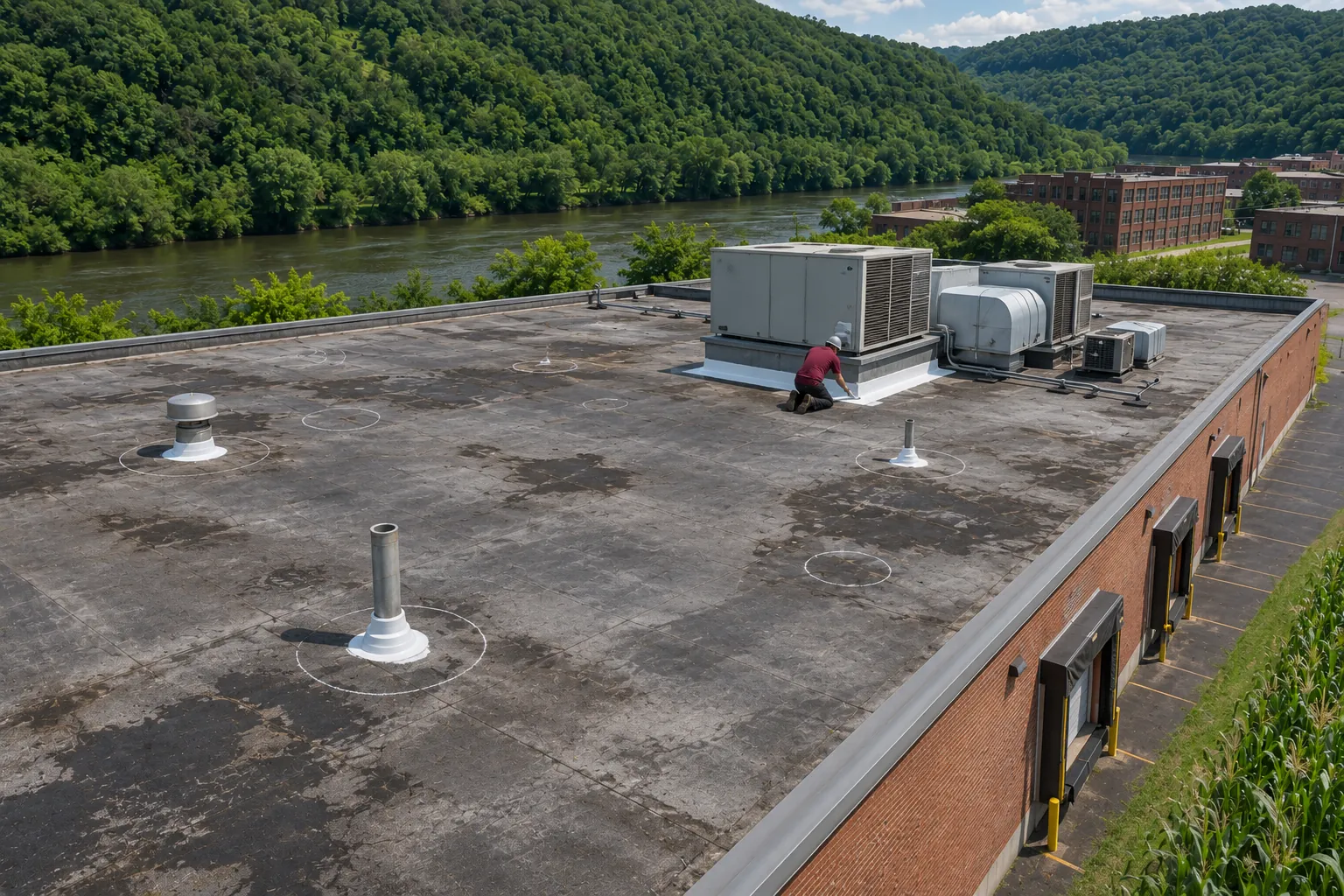
Pittsburgh commercial roof leak repair fits when the leak comes from a specific entry. This table shows when a traced repair fits and when the roof needs more.
| What You See | Traced Repair Fits | Plan Further Work |
|---|---|---|
| One recurring drip | Entry found at one detail | Several entries along a whole edge |
| Leak only in snowmelt | Blocked drain or one joint | Ice backing up at every drain |
| Stain near a parapet | Coping joints at one wall | Coping and wall failing all around |
| Leak in wind-driven rain | One curb or transition | Every equipment opening loose |
| Drip after a patch | A new source nearby | Wet insulation across the bay |
Where and when a leak appears says a lot about where it starts.
Snow and ice redirect meltwater into joints that ordinary runoff never reaches.
Open coping joints let water into the wall, and it shows at the roof connection below.
Rain pushed sideways finds curbs and transitions that straight rain misses.
Ice at the edge forces water back under a section that looks dry from above.
Goods under an active drip need a temporary seal now and a traced repair next.
A leak that returns after a patch usually means the entry sits somewhere else on the water path.
Tracing comes before any patch, and each method fits a different kind of leak.
Interior drip locations, weather, and timing get matched to roof details above and upslope of the stain.
Blocked drains and the seams that backed-up meltwater reached get checked, with moisture readings beneath the covering.
Wall caps, mortar, and base flashing are inspected together before the nearest membrane seam gets resealed.
Readings separate an active entry from water already trapped in the insulation, which can drip for days.
A traced repair ends the cycle of patching the wrong spot.
Repairs land where water gets in, so the stain inside stops growing.
Sealant goes on the failed joint instead of every seam near the drip.
Wet insulation found during tracing comes out before it rots the deck.
Each traced leak is logged with weather and location for the next visit.
Joints reached only by meltwater get repaired before the next thaw.
Curbs and transitions facing the weather get reflashed so sideways rain stays out.
Tenants hear what was found and fixed on the roof instead of watching buckets fill again.
Photos of the entry before and after the repair show exactly what changed on the roof.
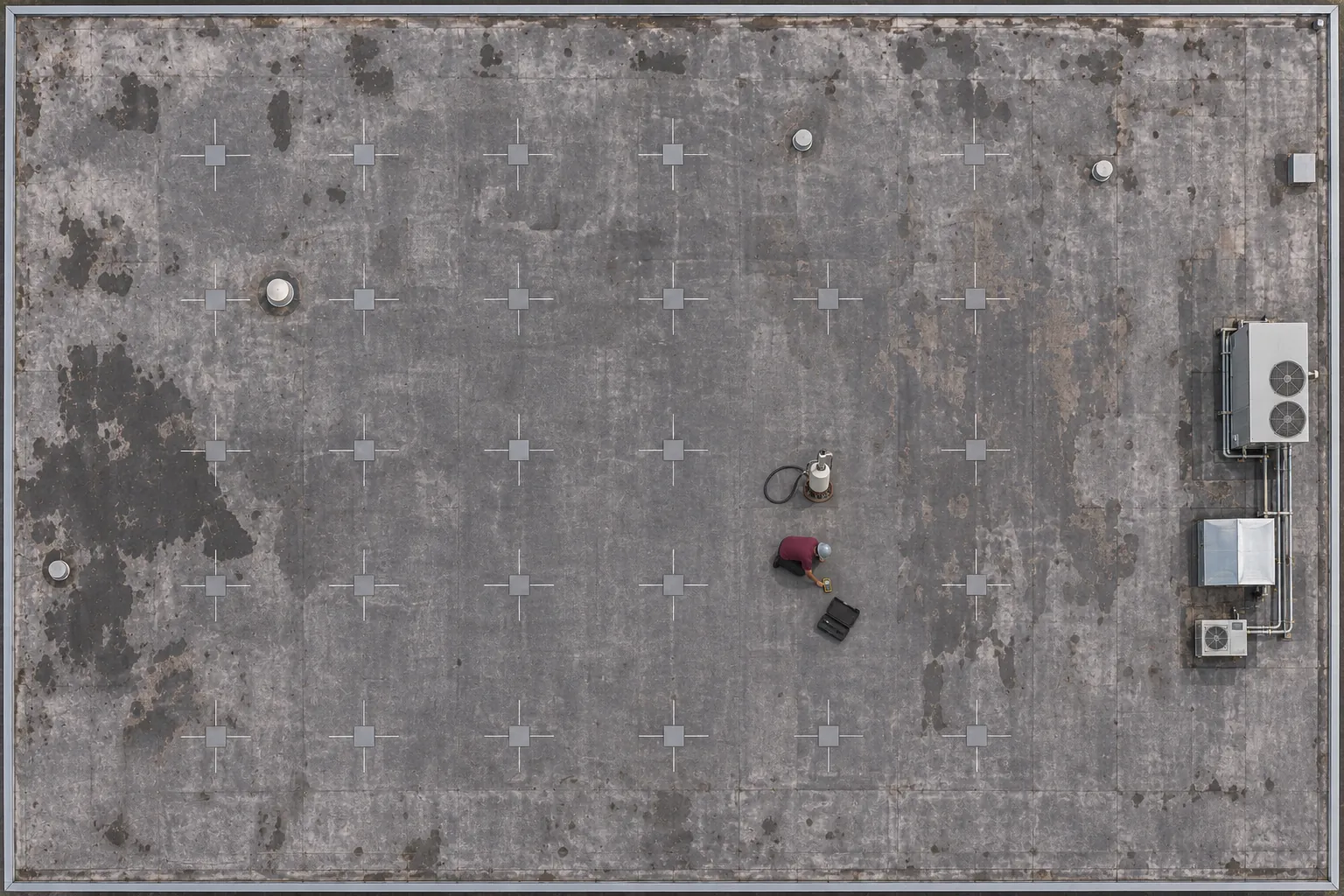
Send the dates, weather, and photos of each leak. We match them to roof details and repair the entry the trace points to.
Get A Free EstimateLeak repairs run from the drip upward to the entry.
We record where water shows inside, when it appeared, and what the weather was doing.
Roof details above the drip and uphill from it get inspected, since water travels.
Coping joints, curbs, and transitions on the likely path get opened or water-tested in order.
The failed detail is rebuilt and any wet insulation found along the path comes out.
Water-testing and a follow-up check after weather confirm the drip has ended.
Once the trace finds the entry, the fix belongs to one of these repairs.
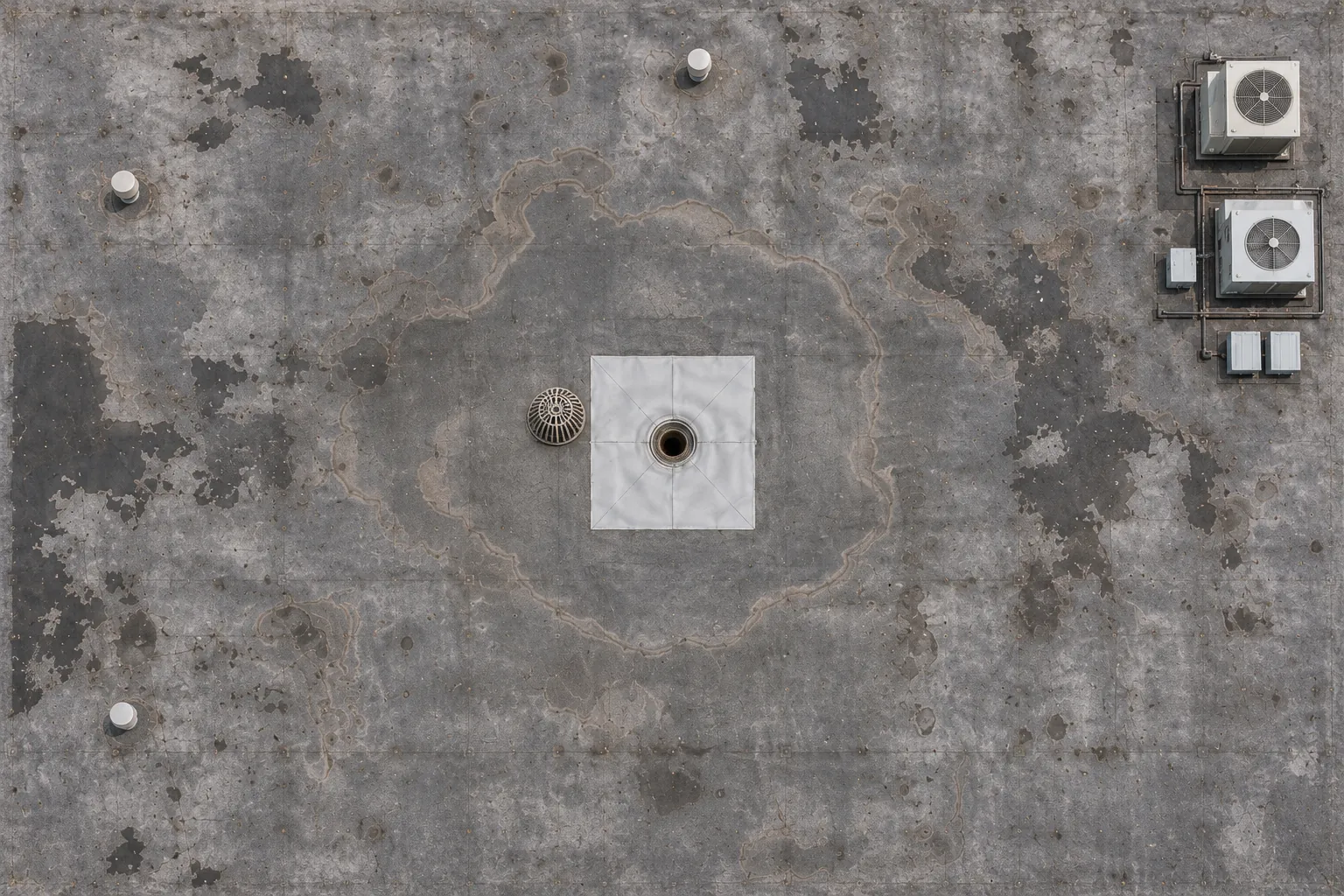
Seams or drains the leak trace points to.
Flat roof repair in Pittsburgh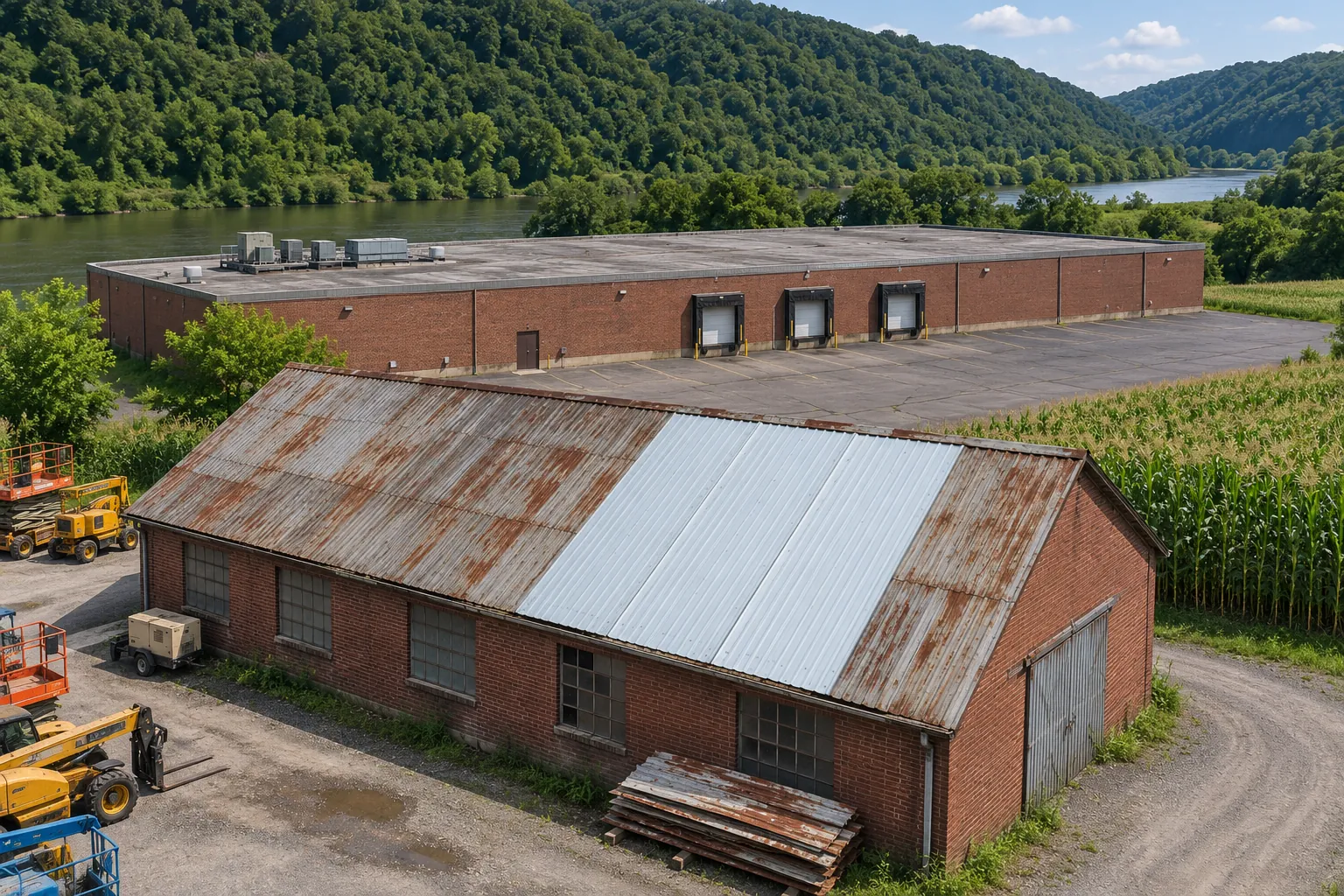
Fasteners or panel laps the leak trace points to.
Commercial metal roof repair in Pittsburgh
Roof leaks over a running production line.
Industrial roof repair in PittsburghAnswers about snowmelt, parapets, ice dams, and leaks in heavy rain.
Snow and ice redirect meltwater toward joints that ordinary runoff never reaches. We check blocked drainage and vulnerable flashing while comparing roof findings with the interior leak. Water held in insulation can keep dripping after the source dries, so the check separates an active entry from water already inside.
Coping joints often let water into a parapet, and it appears at the roof connection below. We inspect the wall cap, the wall, and the base flashing together before proposing a repair. Resealing the nearest membrane seam again and again leaves that source untouched.
It covers the blocked drainage route and every roof detail the backed-up meltwater reached. We inspect those areas once access is safe and measure moisture trapped under the covering. Clearing the ice restores runoff, and damaged seams or flashing still get repaired afterward.
No roof should leak in any weather, even if it stays dry most days. We compare wind direction and the leak location with flashing, wall transitions, and equipment openings. The repair targets the path the rain is taking instead of accepting an occasional leak.
Water trapped in insulation or riding on the deck keeps draining for hours or days. Moisture readings show how much is held in the roof, and wet boards near the entry come out during the repair so the drip ends with the source.
Testing starts low on the roof and works upward, wetting one suspect detail at a time while someone watches inside. When the drip appears, the last area wetted holds the entry. It takes patience, and it keeps the repair off details that were never leaking.
Leave them until the leak is traced if they are safe in place, since the stain pattern helps locate the entry. Once the roof repair is done and the area has dried out, the tiles can be replaced without hiding a returning leak.
Send the dates and photos of each leak. We trace the water back to the entry and repair that detail.