Fewer Guesses
Photo logs point the trace at one roof area instead of the whole building.

As a Baldwin commercial roof repair contractor, we track down leaks that come and go by matching your photos and weather notes to the roof details above.
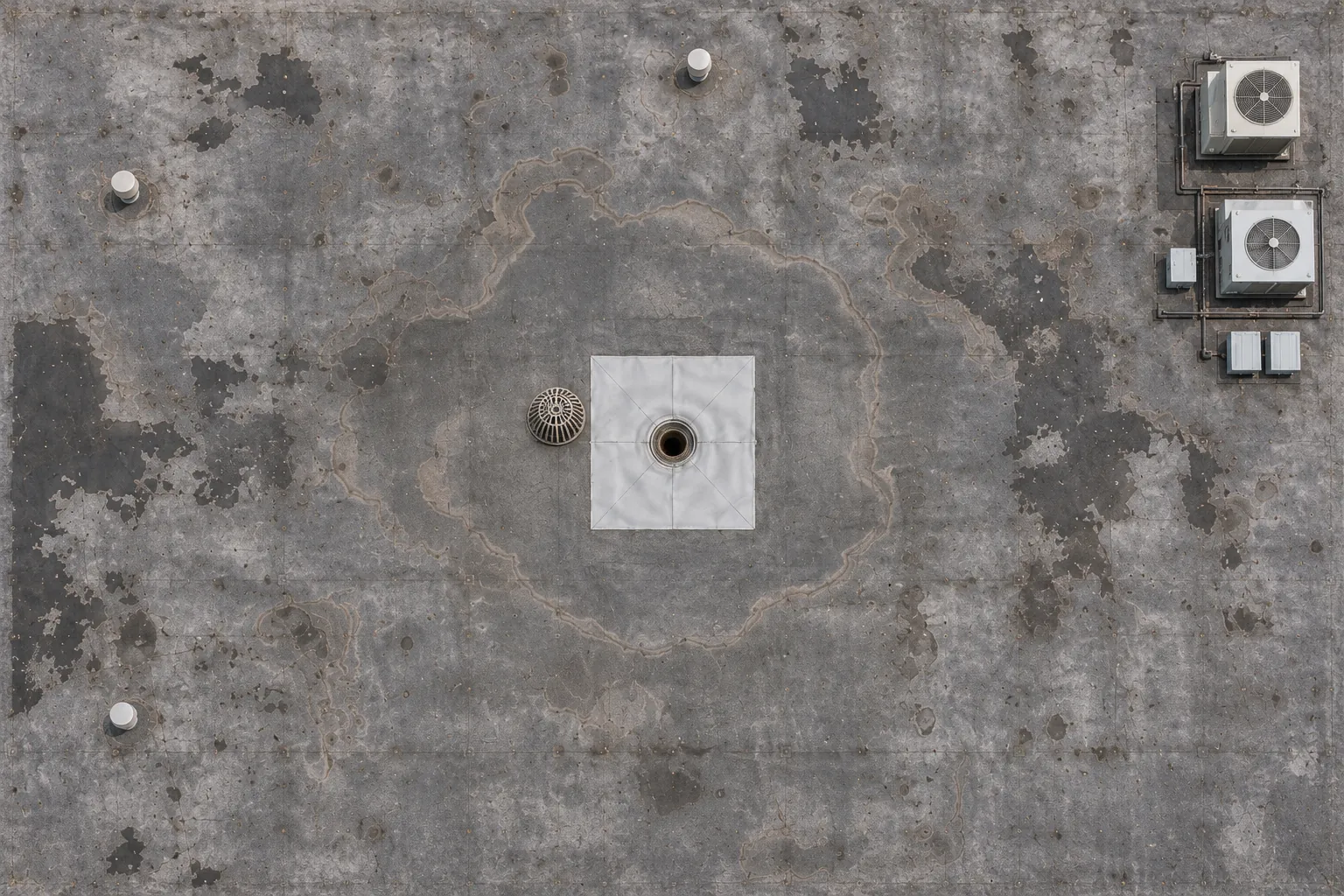
Baldwin commercial roof repair for intermittent leaks works best when the owner keeps a simple record each time water shows up.
From a safe spot, photograph the wet area with nearby reference points such as a column, a light, or a doorway. Note the time and the weather, including wind direction if you know it.
We relate those reports to roof details and earlier findings. A close-up of a puddle shows little, while a wide photo with landmarks lets us place the leak under the right drain, curb, or seam.
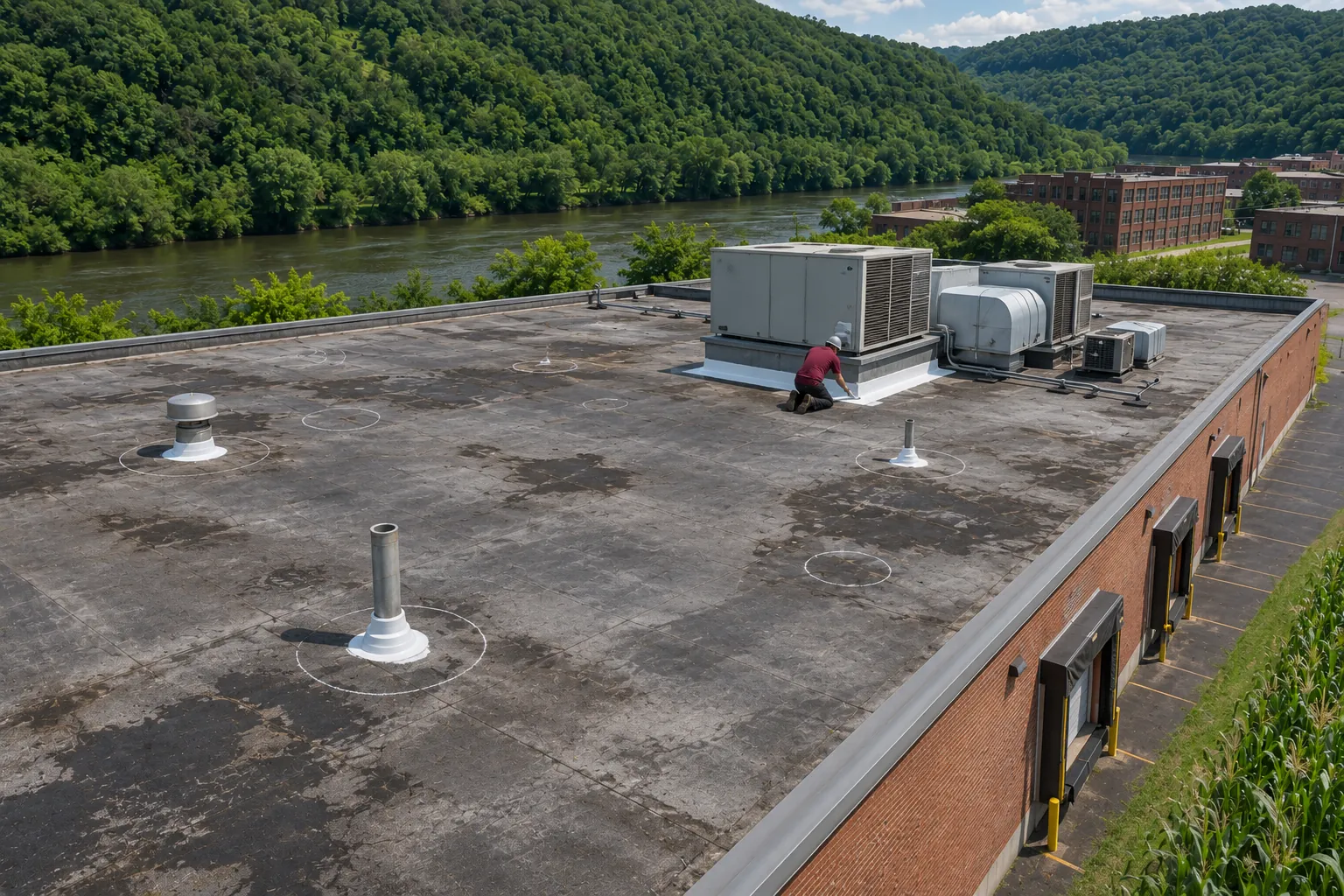
Intermittent leaks leave patterns, and each pattern points to a different roof detail.
Leaks that need wind from one direction point to a wall, curb, or transition facing that way.
Water that appears as snow melts points to a blocked drain or a joint reached by meltwater.
After a full day of rain, a leak means water is backing up to flashing that short storms never reach.
Drips that keep coming after the sky clears mean water is stored in the insulation.
A drip beside an earlier repair can be a new entry nearby or the old one, and the trace decides which.
Condensate lines leak when rooftop units cycle, so drips at those times get checked at the curb.
A traced repair ends the cycle of waiting for the next drip.
Photo logs point the trace at one roof area instead of the whole building.
Repairs land on the roof detail the leak pattern points to instead of the nearest seam.
Stored water found during tracing comes out, so drips stop when the weather does.
Each traced roof leak joins the record, so a future drip gets solved faster.
Walls and curbs facing the storms that cause leaks get reflashed first.
A shared leak log turns scattered complaints into tracing data for the roof.
Joints reached by meltwater get repaired before the next winter thaw.
Likely entries are tested in order, so the repair targets one confirmed roof detail.
The tools for finding a leak that will not show on demand.
Wide shots with fixed reference points, taken from a safe position, let us map the drip to the roof above.
Dates and wind directions from your notes get compared with the roof details facing that weather.
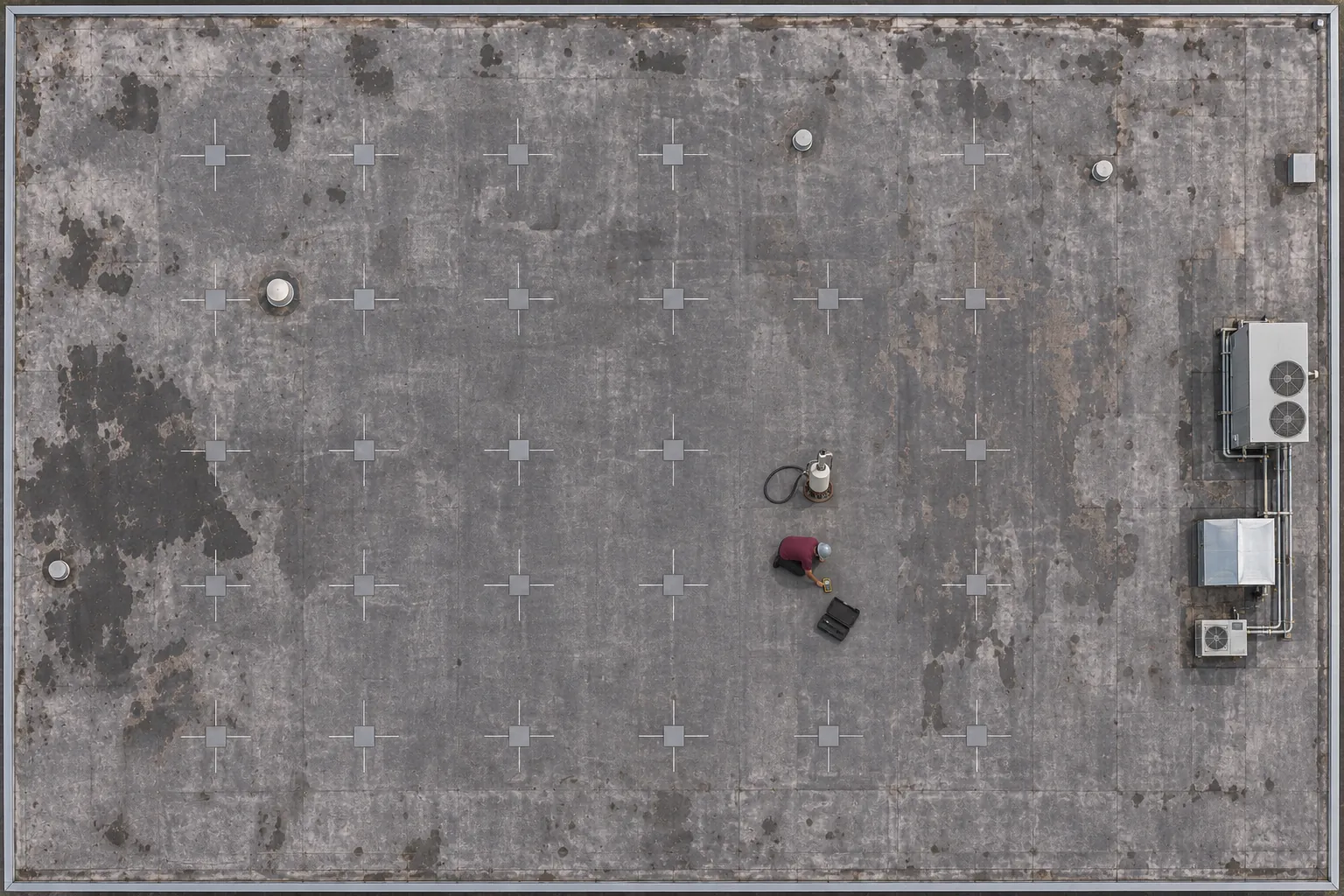
Readings across the area separate an active entry from water already held in the insulation.
Suspect details get water-tested one at a time, in order, until the leak shows inside.
Past invoices, photos, and inspection notes get laid against the new reports to see which roof details were already repaired.
Edges of older patches are probed and inspected, so a working repair stays and a failed one gets replaced.
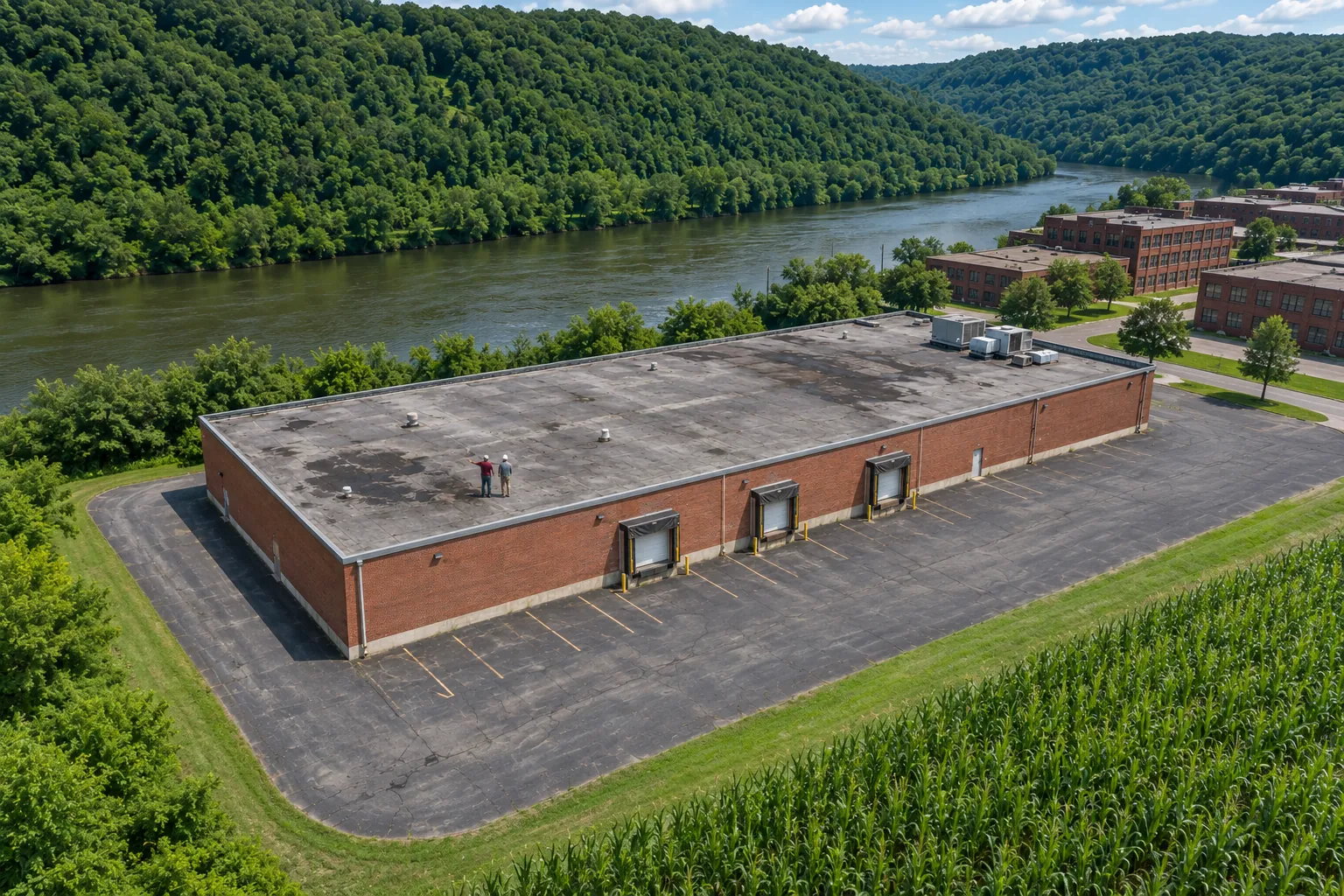
Send your photos with the date and weather. We compare them with the roof and earlier findings before the visit.
Get A Free EstimateFour steps turn scattered leak reports into one repair.
We collect your photos, dates, weather notes, and any earlier roof repair findings for the building.
Each report gets placed under its drain, curb, seam, or wall to narrow the likely entry.
Moisture readings and water tests check the likely roof details in order.
The confirmed entry is repaired, and any later leak report gets compared against the fix.
Beyond Baldwin, our repair area covers Pittsburgh and four other towns. Anywhere else, please call us or send us a message.
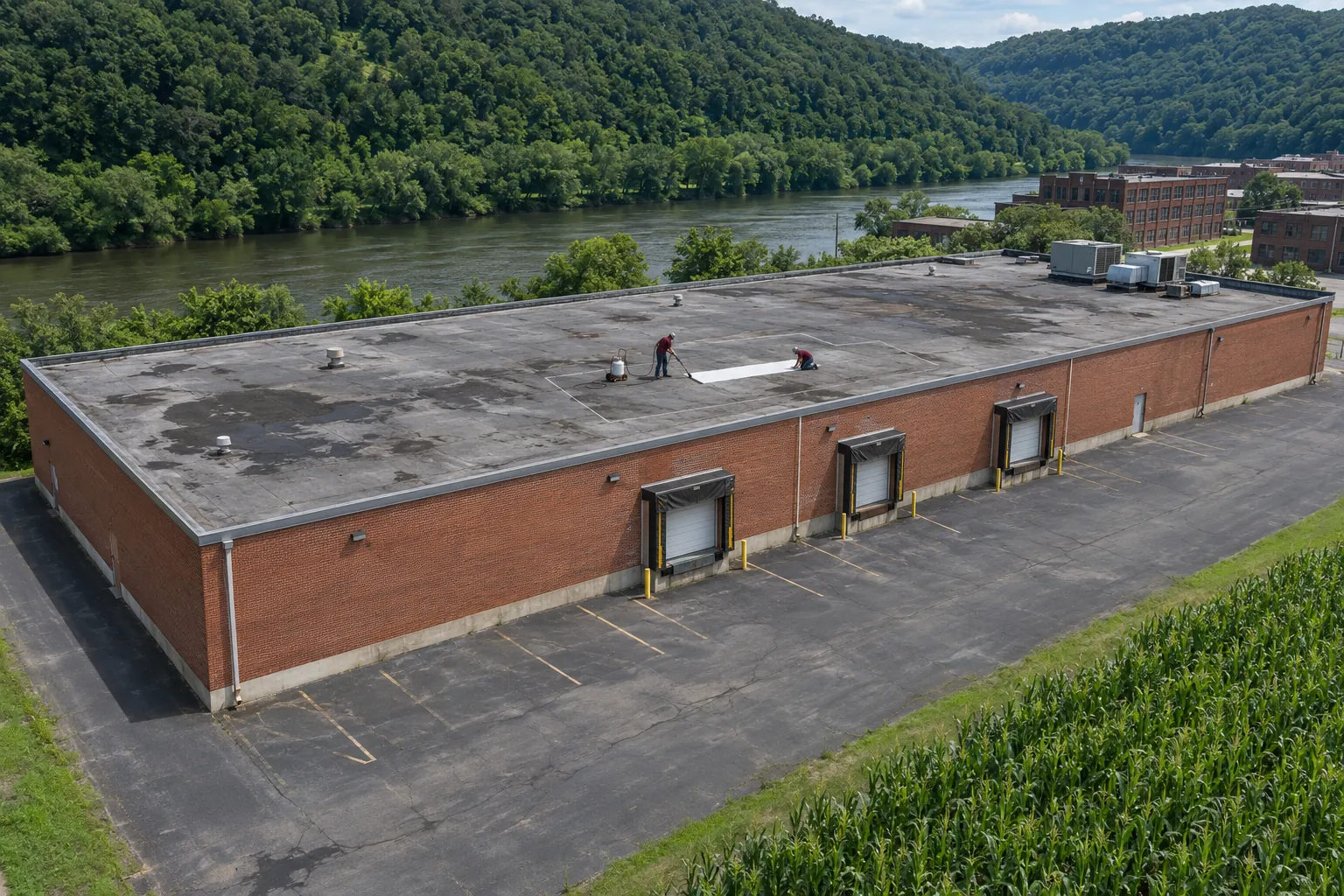
Warehouses, shops, and hillside blocks across the city.
Pittsburgh commercial roof repair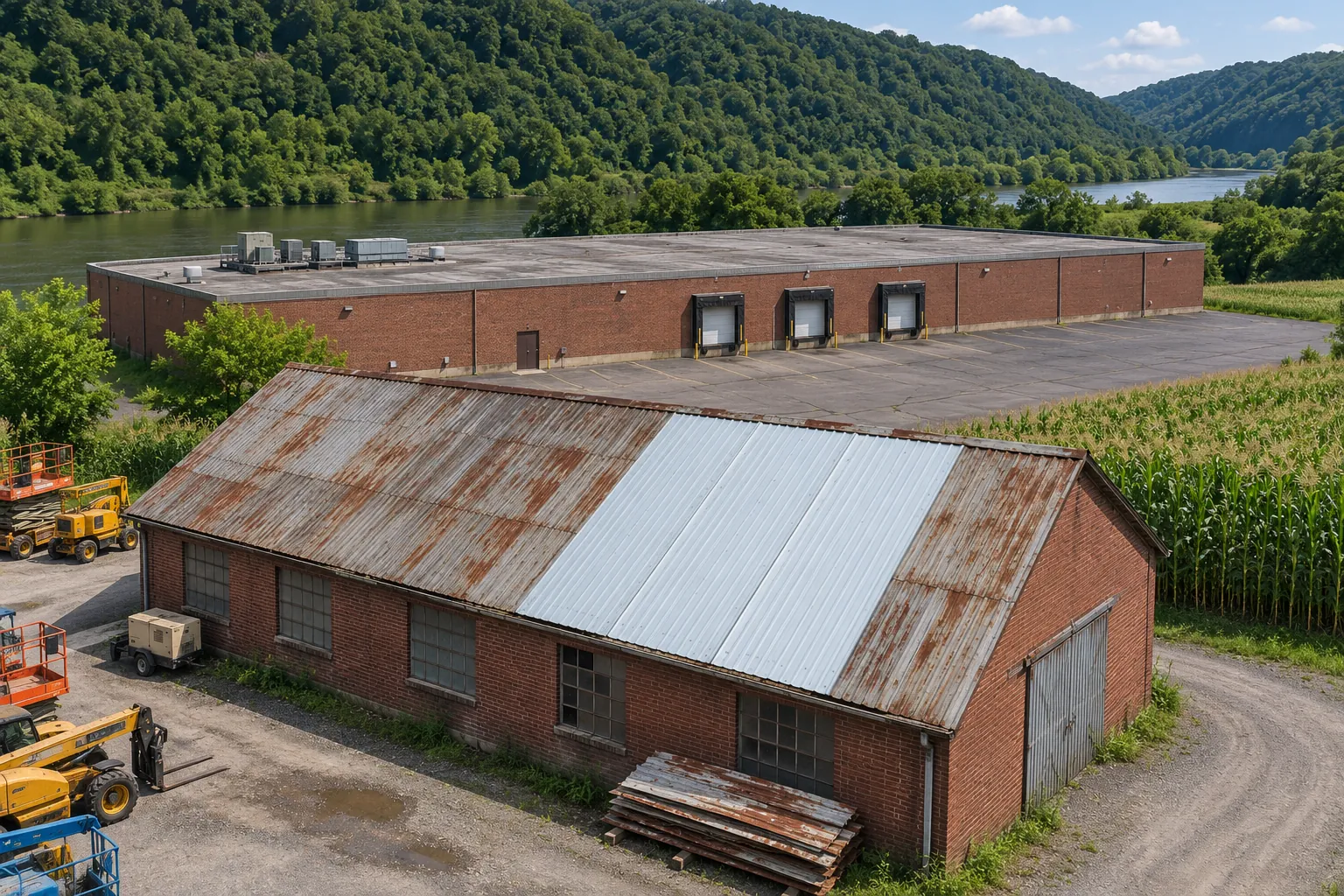
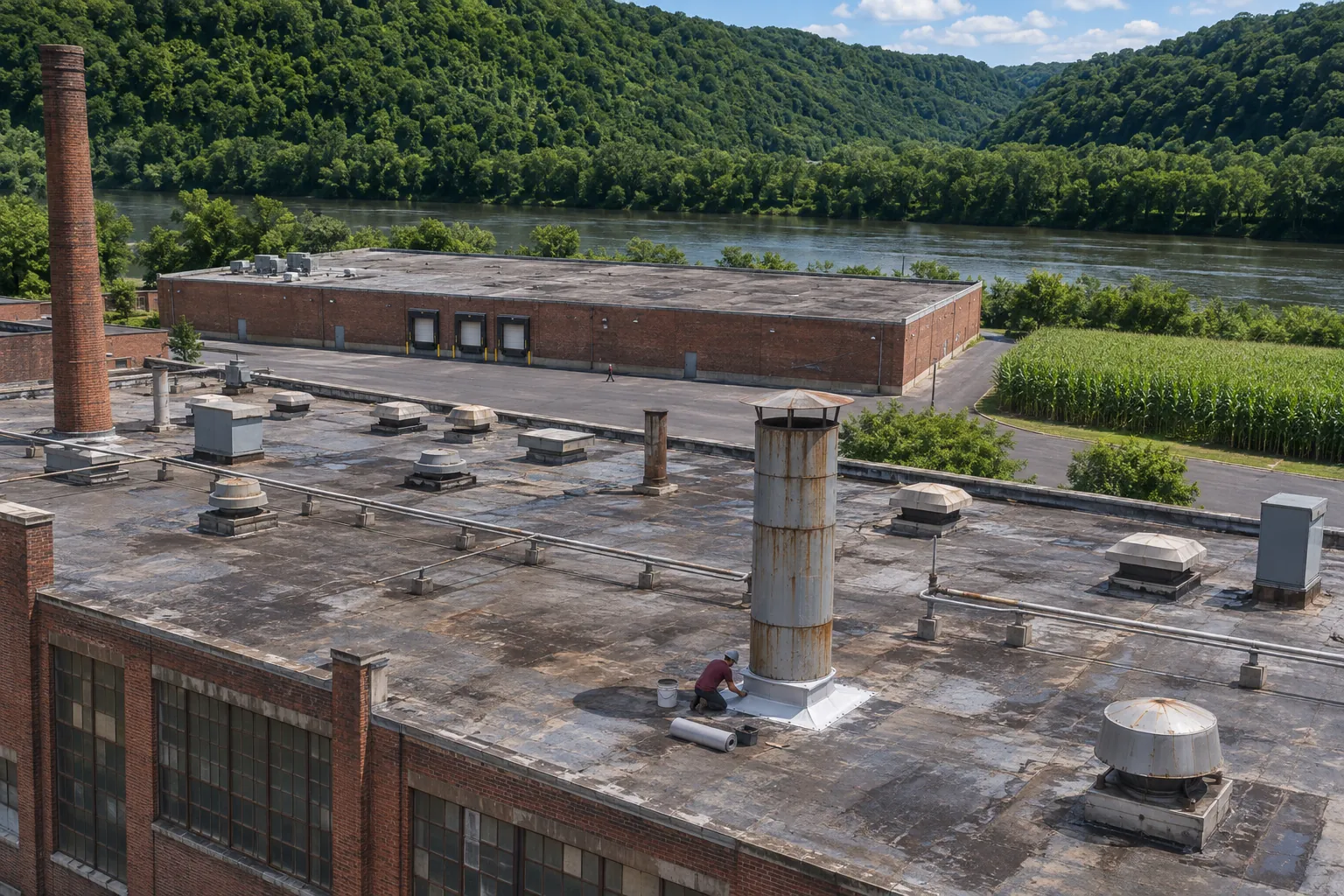
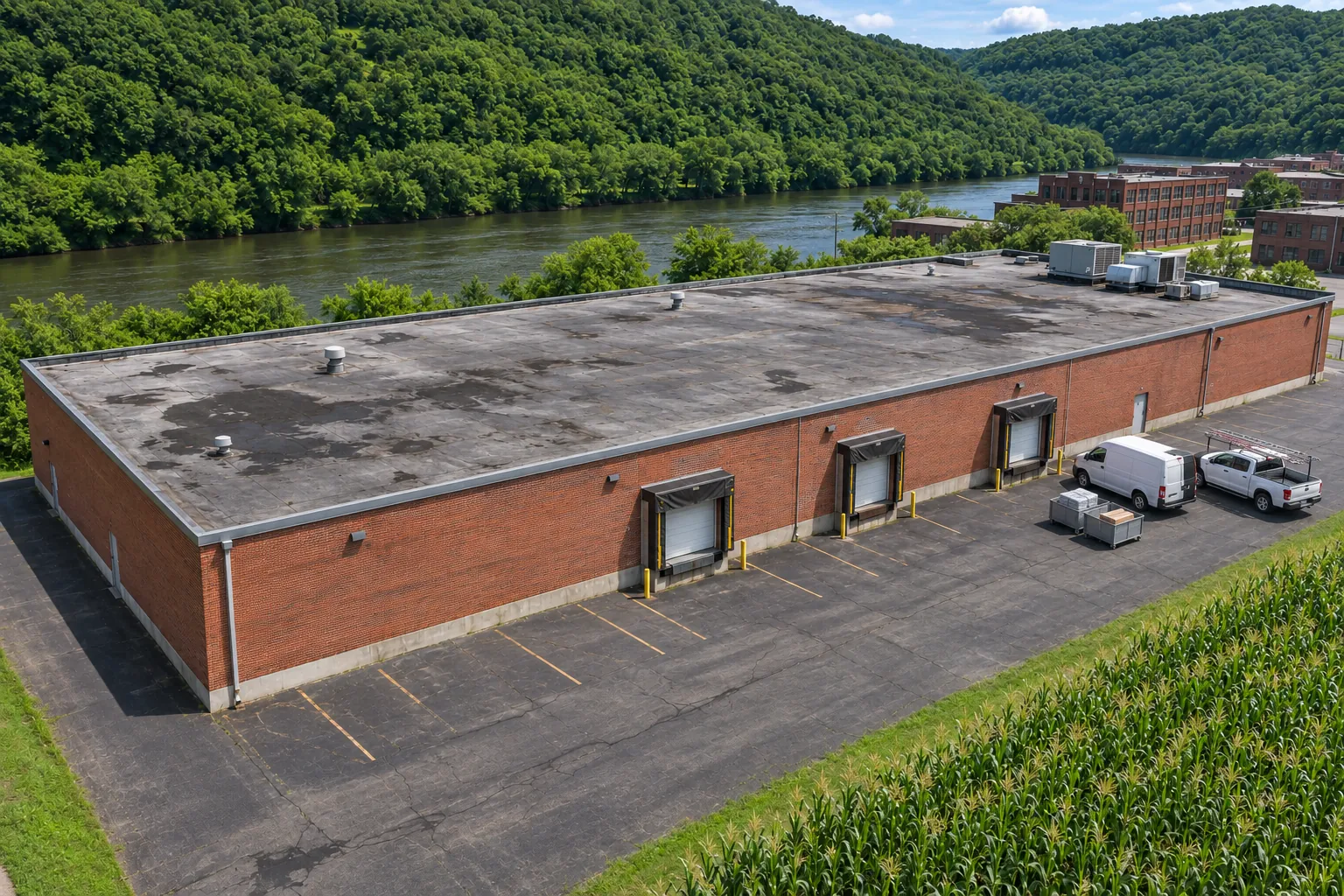
Shared warehouse valleys checked across property lines.
West Mifflin commercial roof repairAnswers for owners chasing a leak that comes and goes.
Photograph the wet location and nearby reference points from a safe position, and note the time and weather. We use that to relate the report to roof details and earlier findings. Clear location shots beat an isolated close-up of water, because the entry point can sit some distance away.
Call after the first return. A roof walk with your first reports often narrows the entry, and every later report adds detail. Waiting lets stored water spread through the insulation and makes the eventual repair larger.
Sometimes it does, and often the water comes from a new entry nearby. We check the patch edges and the roof details upslope before replacing anything, so a working repair stays in place and the real entry gets fixed.
Keep a shared log with the date, time, weather, a wide photo, and the room. Owners can forward the log with the estimate request, so tracing starts with real data instead of memory.
Ceiling tile stains, drips at light fixtures, and wet spots along walls each point a different way. Stains with rings show repeated leaks at one spot, while a single new stain can mean a recent entry somewhere upslope.
Seasonal leaks point to seasonal water paths. Winter leaks often follow meltwater and ice at drains and edges, while summer leaks follow wind-driven storms against walls and curbs. Matching the season to the roof details narrows the trace quickly.
They help a lot. Invoices and photos from earlier repairs show which details were already patched, which narrows where a returning leak can still be getting in.
Send your leak photos, dates, and weather notes. We match them to the roof and repair the entry they point to.